

To address rising housing costs that keep homeownership out of reach for many families with low financial resources, some nonprofits are advancing the concept of shared equity housing. In shared equity housing, ownership is shared between a homeowner and a nonprofit representing the community, between a group of homeowners, or when an initial subsidy is passed down from one family to the next over generations to keep a home affordable over time. Models include community land trusts (CLTs), deed-restricted homes, limited-equity housing cooperatives and resident-owned manufactured housing communities (ROCs).
Shared equity programs typically limit the sale or rental price of homes in their portfolios, require the sharing of home appreciation gains and provide homeownership assistance to program residents. They create long-lasting affordability in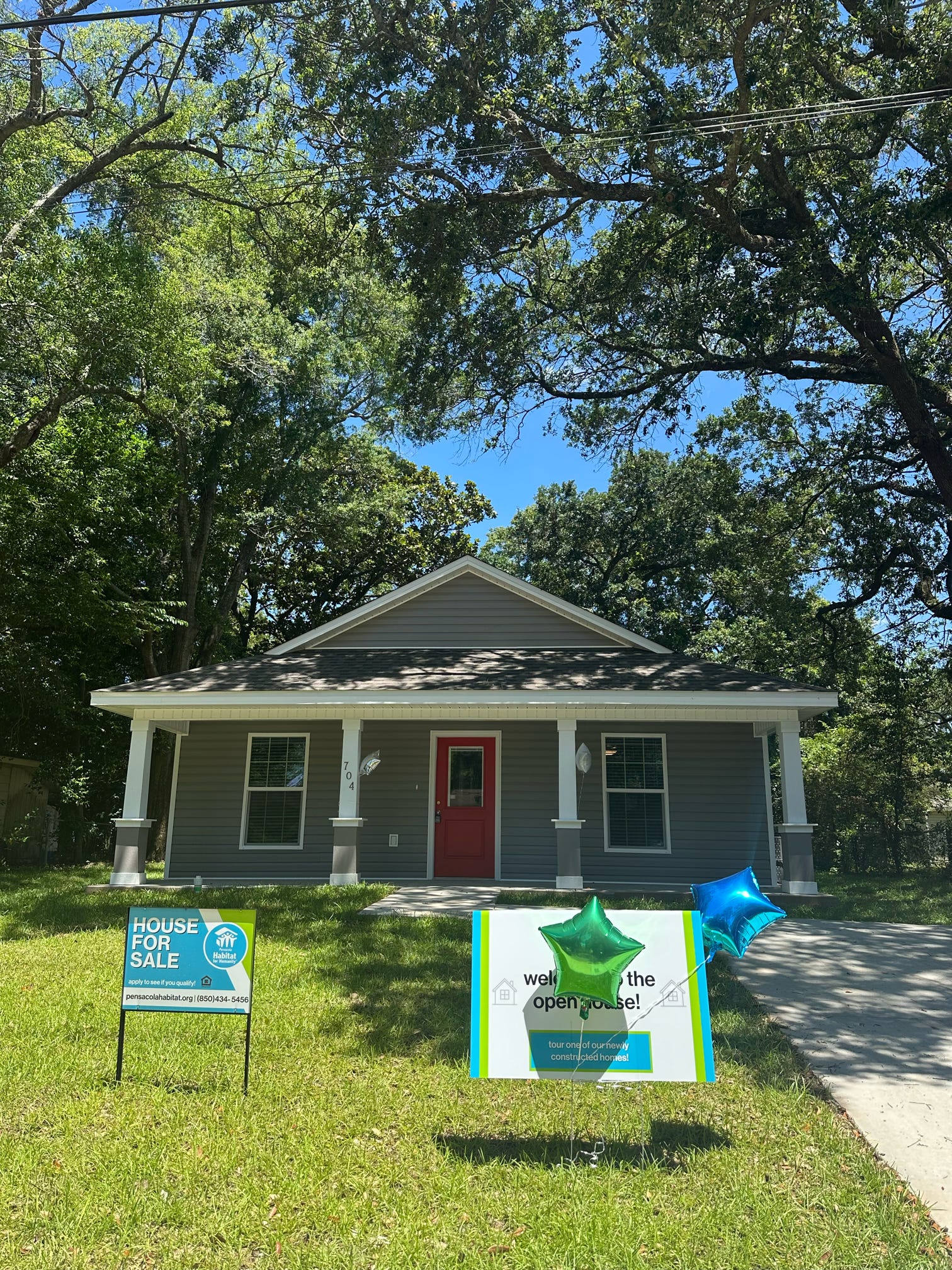 lower income communities.
NeighborWorks® America network organizations have been engaged in shared equity housing for many years, and NeighborWorks Shared Equity Housing Initiative resources have provided space and support for network members to explore innovative strategies to keep housing affordable. Pensacola Habitat for Humanity and Neighborhood Housing Services of Oklahoma are two NeighborWorks network organizations that have recently embraced this concept using models that are tailored to their communities’ individual needs.
NeighborWorks has given both organizations grants through a Congressionally approved $12 million initiative that began in 2019. The initiative provided investment, technical assistance and scholarships to help housing organizations grow their permanently affordable homeownership portfolios NeighborWorks’ support for the exploration of these models is another example of how prioritizing innovation in affordable housing and an example of how network organizations create homes and build America. In fact, scaling solutions like these is so important to the national nonprofit that it’s included in the 2025-2027 strategic plan.
Engaging stakeholders in Pensacola
Betsy McDonald, vice president of programs at Pensacola Habitat for Humanity, describes the conditions that led her organization to embrace the shared equity model. “In 2022, we were getting squeezed on all sides by market forces,” she recalls. “With the rapidly increasing cost of land and building materials, and the shortfall of skilled trade workers, we were really feeling the pinch, and we were unable to serve folks that were below 50% of the area median income.”
That’s when the organization’s CEO, Sam Young, had the idea to bring a community land trust to the community. To assess whether business leaders would support this approach in Pensacola, they held a stakeholders’ lunch.
“We invited community members, stakeholders and elected officials from both counties that we serve,” says McDonald, “and there wasn't an empty seat in the house. That's when we realized, 'This is really resonating with community leaders, political figures -- this is going be the next big thing in our community,' and it's really taken off from there." After three years of work – research, fundraising, building support – the organization launched the Northwest Florida Community Land Trust.
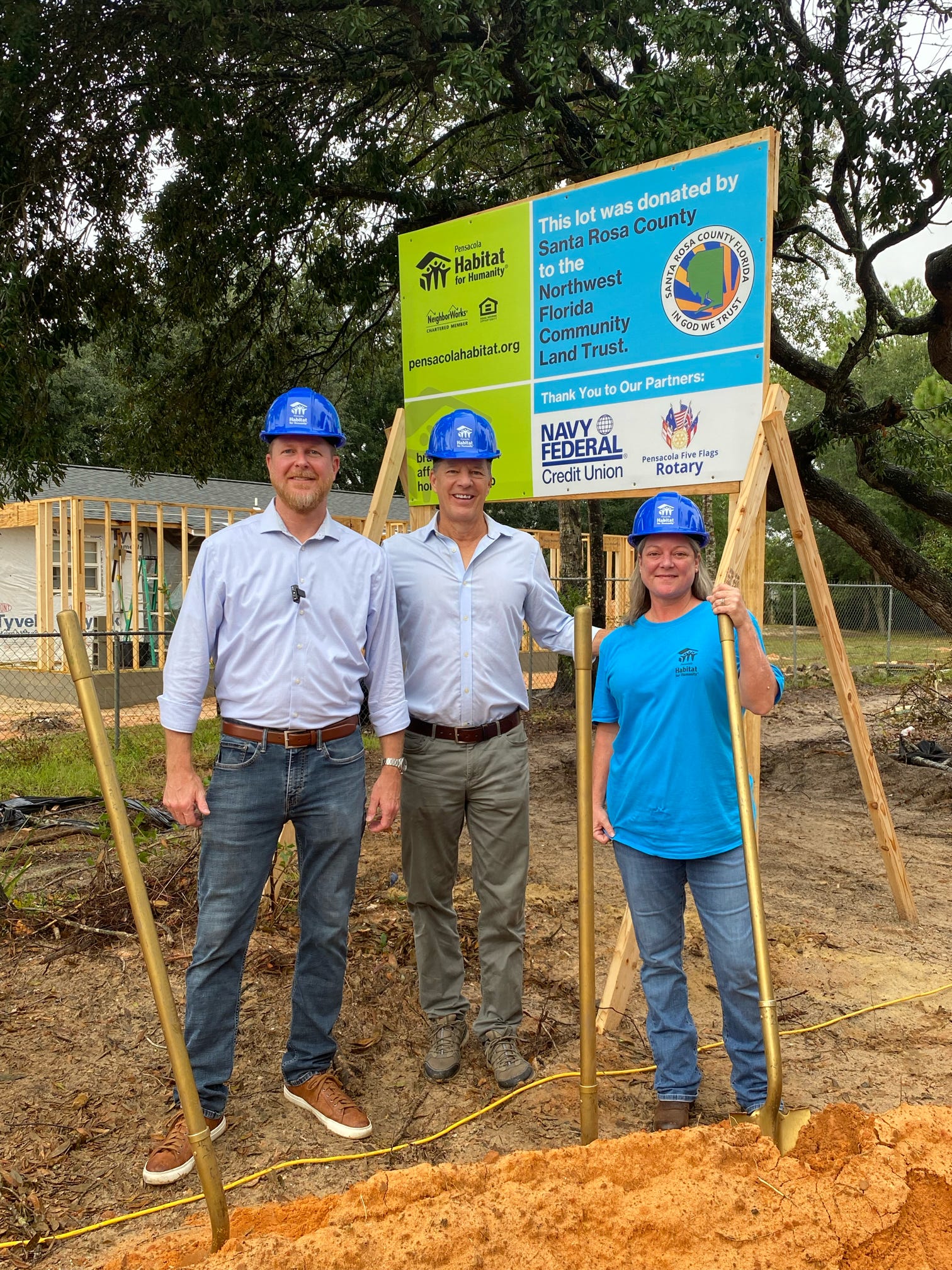 Northwest Florida CLT separates ownership of the land from the home. Each homeowner in the CLT will own their house, but not the land on which the house sits. Instead, they will sign a 99-year ground lease for the land. Removing the cost of the land from the mortgage creates affordability for buyers as they build shared equity.
Alicia Popper, Habitat Pensacola’s CLT program manager, says the land trust has built nine homes and is building an additional 17 on lots in their inventory in Santa Rosa County and Escambia County. Interest in purchasing is high. Of the nine homes that they’ve built, they have four selected homebuyers and expect the remaining homes to be claimed quickly. “And through a partnership with the Home Builders Association and the city of Pensacola,” she says, “We have an additional three homes in the works.”
Pensacola CLT serves income bands from 30% to 120% of the area median income. Guidelines vary from one project to another, depending on the partners and financing.
Introducing the Community Land Trust to Oklahoma
Further west, NHS Oklahoma launched the first land trust in the history of the state in 2024 – the Oklahoma Community Land Consortium (OKCLC).
NHS Oklahoma Executive Director Katrina Washington was familiar with various forms of shared equity housing from her time living in Maryland and Atlanta, where they were more common. “I thought shared equity could be successfully adopted here and incorporated with our development,” she says. It’s been very well received by many of the organization’s lending partners, according to Washington. “With our shared equity concept, we're not going to be separating the land from the structure,” she explained. “We're just doing a straight shared equity model with a deed restriction. That's going to be an easier way to introduce it here in Oklahoma.” A deed restriction stipulates that the buyer agrees to return ownership to the land consortium.
NHS Oklahoma will also use shared equity through OKCLC as a mechanism to keep people out of foreclosure. Washington says many of the mortgage workout plans that were available during the COVID pandemic 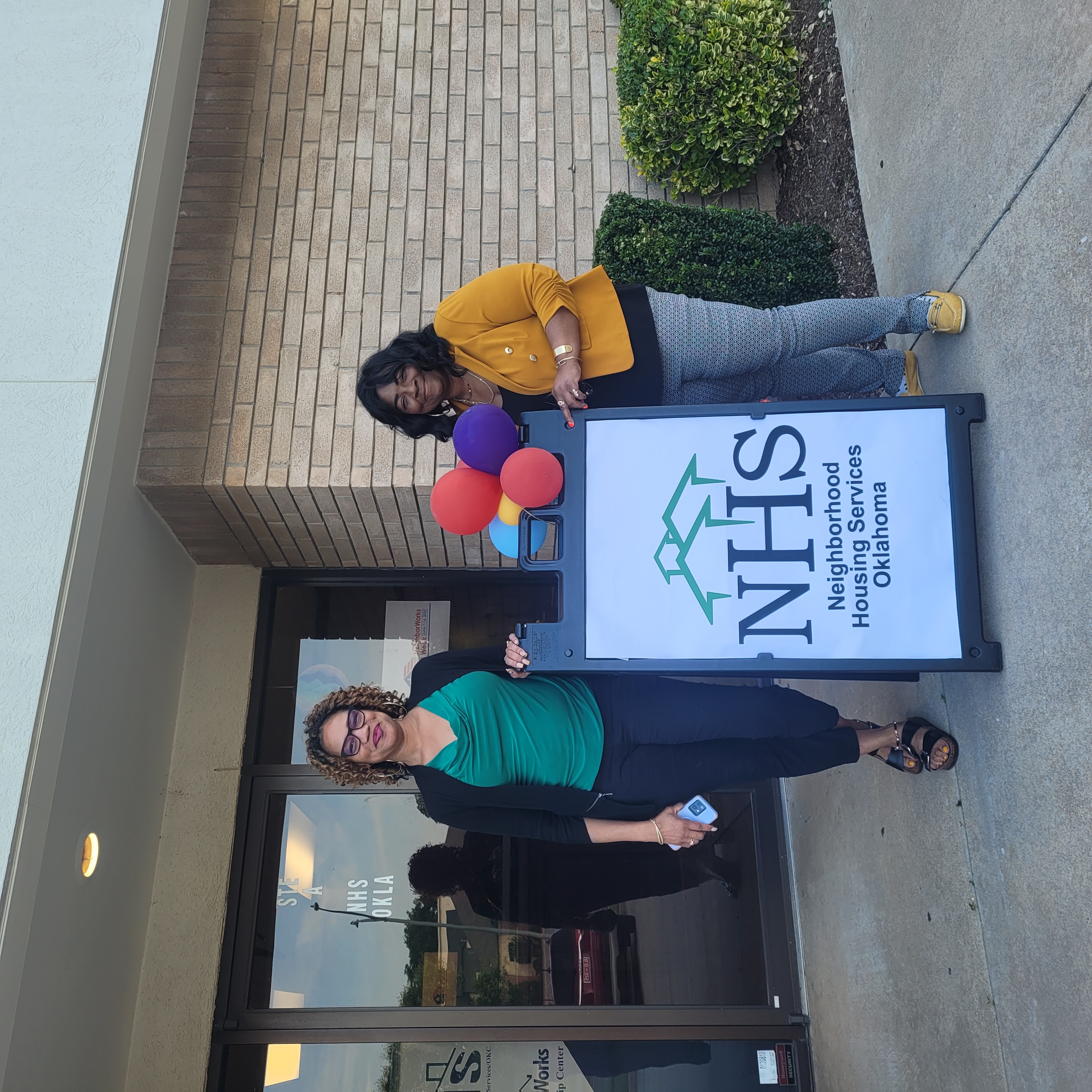 are no longer available, but people still struggle financially. “Their salaries aren't going up, but prices are increasing, and they really have nowhere to go,” says Washington. “We're struggling to find any type of workout plans, but some of these individuals can place their homes in our land trust.” Lenders are often willing to work with homeowners in this situation, says Washington. “We can find a subsidy, reorganize them, and put them in the land trust. They can actually stay in their home, and they agree to pay it forward to a new buyer.”
NeighborWorks support paves the way
Both Washington and McDonald say their organizations’ entries into shared equity was made easier and more efficient with assistance from NeighborWorks America, in the form of funding, training, technical assistance and peer-learning opportunities.
“Since we're the first land trust in Oklahoma, I didn't have local resources to pull from,” recalls Washington. “But NeighborWorks America connected me with people in other areas. I've been able to go to other locations to see in practice how others do it.” Through these opportunities, which included technical assistance in 2024 and a planning grant in 2025, Washington says, the organization engaged with other NeighborWorks CLT leaders, gained access to best practices and implemented a strategic approach to shared equity housing. “These groups connected me with the resources they’ve pulled together so I didn’t have to try to find them myself,” she says.
Northwest Florida CLT realized similar benefits, including a feasibility grant and additional funding from NeighborWorks America. “I had the opportunity to participate in a cohort, and a lot of that training and technical assistance really led to us being able to launch in January of 2025,” says McDonald. “I attribute how quickly we were able to launch and go live to that technical assistance and that grant we received from NeighborWorks,” she says. “Without it, we would have invested a lot more money into my training and technical skill building.”
NeighborWorks Shared Equity Housing Director Jenee Gaynor says that it’s harder than ever to buy a home in many communities across the country. “Shared equity models are efficient, effective and affordable. With these models, NeighborWorks America and our partner nonprofit housing organizations make it possible not just for one person to buy a home, but for one investment to make homeownership affordable for multiple owners over the long term.”
Since the initiative began in 2019, NeighborWorks network organizations have more than doubled their shared equity housing portfolios to over 5,000 units.
With continued support from NeighborWorks, more organizations are positioned to use shared equity strategies to keep homeownership within reach for lower-income families.
“Our goal is to create and maintain affordable homeownership beyond a closing date,” says Popper. “The stewardship of land through the CLT provides not just a solution today but creates permanent affordability for generations to come.”