

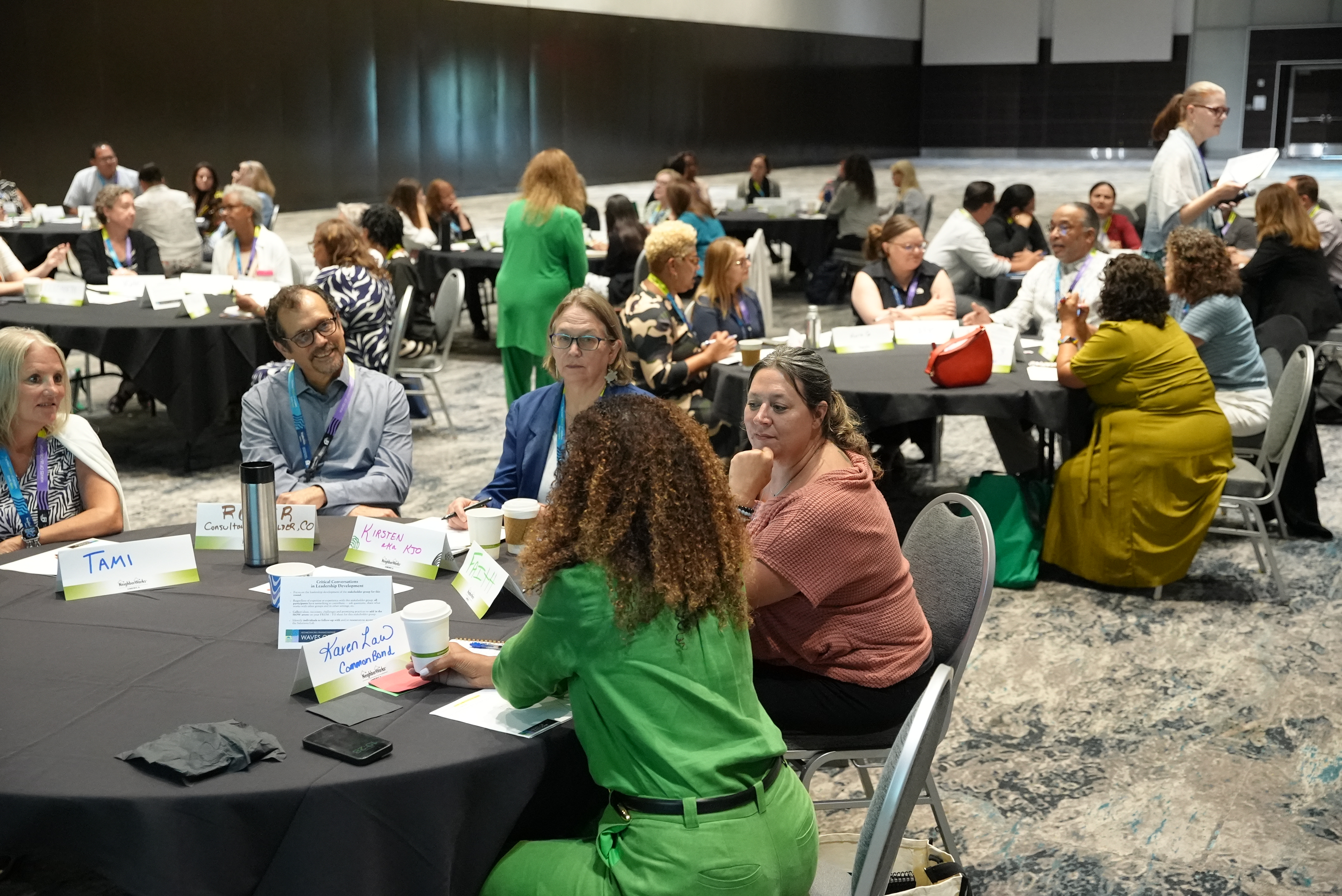
NeighborWorks® America’s Community Development Financial Institutions (CDFIs) have a significant impact on the nation’s housing and on businesses. The national nonprofit’s Business Intelligence team shined a spotlight on that impact during the NeighborWorks Training Institute in Miami Beach last week, where data told a story of a network committed to making sure people can live in affordable homes, strengthen personal finance and build and operate the businesses that help communities thrive.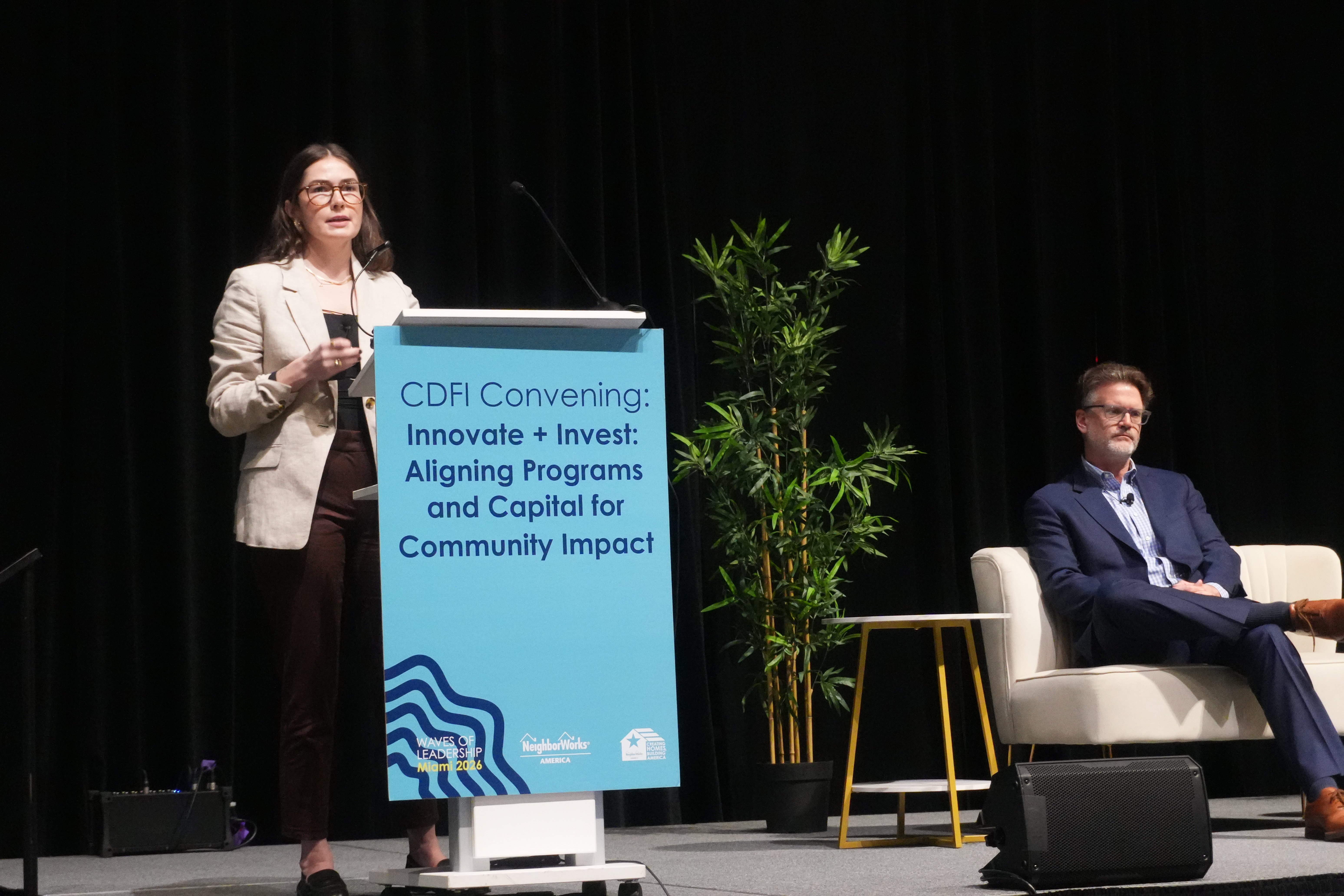
“NeighborWorks CDFIs are an economic engine fueling communities,” explained Michael Butchko, vice president of Business Intelligence. Together, network CDFIs reported $55.6 billion dollars in direct and leveraged investment to their communities over the last decade, and demand for services keeps growing.
As of July 2026, 71 NeighborWorks organizations have certified CDFIs, located in 39 states and territories, for a total of 76 network CDFIs overall.
Uncertainty surrounding federal funding opportunities and significant changes to award programs and certification requirements have had an impact on both the network and CDFIs across the nation. In January 2026, 1,383 certified CDFIs operated in the U.S., Butchko said. In July 2026, that number fell by just over 100 CDFIs to 1,272 – a decrease of 8.6% in just six months. 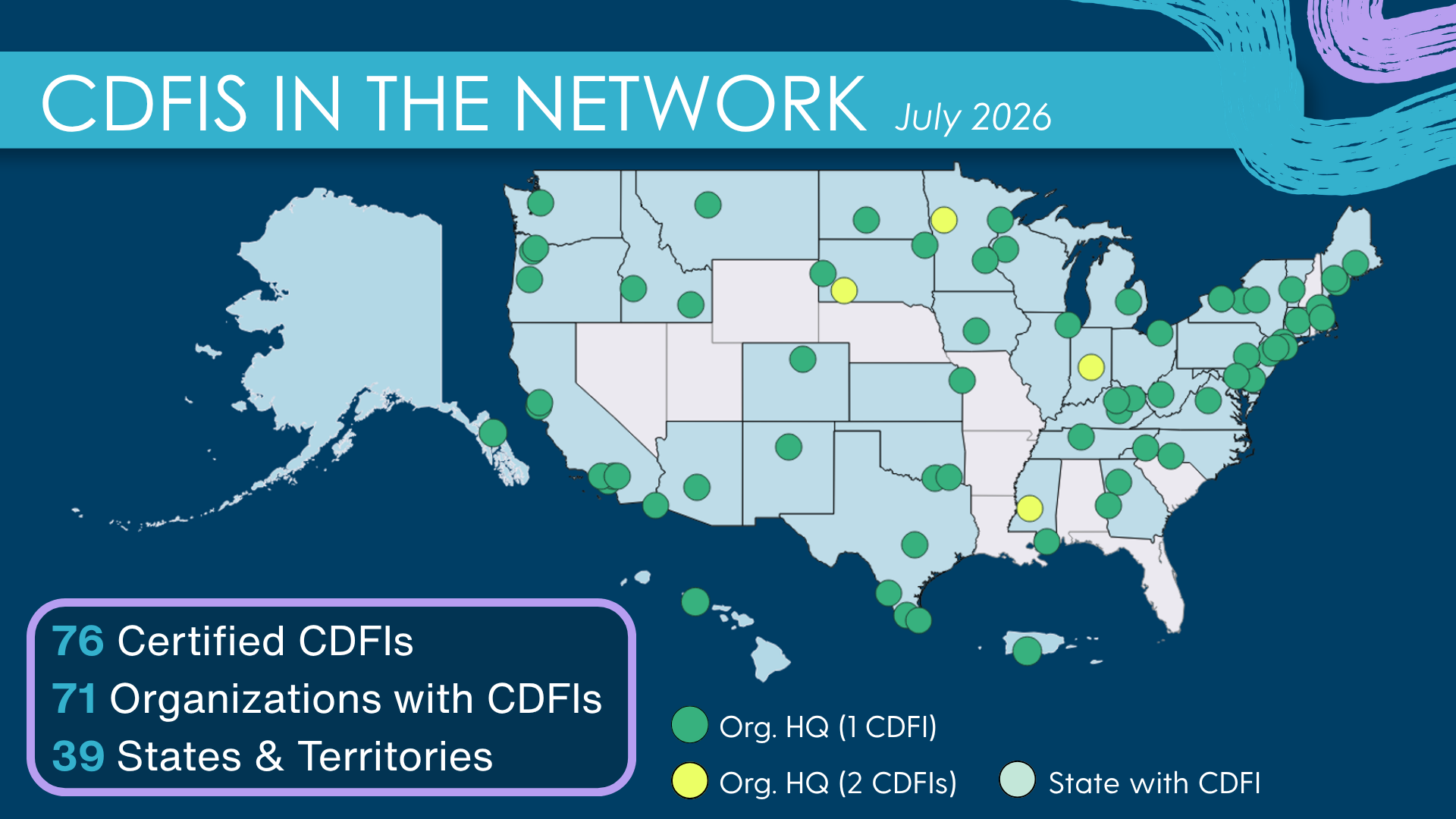
“But for the CDFIs that remain in the NeighborWorks network, there’s a powerful story to tell,” Butchko said.
Cait Baker, senior manager of Business Intelligence, quantified that story. In the last three and a half years, she said, CDFIs in the network made nearly 87,000 loans in all 50 states, Washington, D.C. and Puerto Rico, resulting in over $3 billion in direct investment.
In the last decade, $3.4 billion dollars financed new homeowners and preserved the homes of existing homeowners through first mortgages, down payment assistance, and rehab lending or refinancing, totaling nearly 70,000 residential loans.
“You also loaned $3.4 billion dollars to nonprofit and for-profit businesses, closing over 12,000 loans for general purposes, business operations, commercial and residential real estate development, and more,” she said. “And since we began collecting this data three years ago, your organizations have reported over $100 million in consumer lending for credit building, debt consolidation, auto purchases, payday/title loan alternatives, and other personal loans, resulting in a whopping 49,000 loans.”
In addition to making loans, CDFIs helped over 720,000 households strengthen their chances of successful tenancy and homeownership and set them up to be more prepared as consumers through counseling and education services, she said.
Over the past three years:
- NeighborWorks network CDFIs made nearly 20,000 residential loans
- NeighborWorks network CDFIs closed nearly 4,000 business loans
- NeighborWorks network CDFIs provided counseling and education to nearly 188,000 households.
“This means you’re on track to have another headline decade,” Baker said.
Another highlight: From fiscal year 2024 to 2025, first mortgage originations by network CDFIs increased for the first time in five years. Given the sharp increase in home prices, that’s particularly notable, Baker said.
Data also shows an increase in down payment and closing cost assistance transactions. “This number keeps going up as network CDFIs continue to adapt to the new normal,” she said. The median loan amount for down payment assistance also increased – by more than $14,000 since 2021 showing another way network CDFIs are filling the gap between home prices and affordability.
Network CDFI loan funds have concerns over availability of low-cost capital, over challenges related to borrower qualifications limiting organizations’ ability to provide financing, and more. But along with concerns, there was optimism, according to a survey administered by the Federal Reserve Bank of Richmond: “Even in the face of uncertainty, all network respondents were all-in on expanding their reach and financial capacity,” Butchko said.
Another thing to highlight? “Network CDFIs are trusted partners within the communities you serve,” Butchko said.
Nearly a third of NeighborWorks’ network organizations have CDFIs, which play a vital role in community development. NeighborWorks held the convening to “bring together our CDFI leaders and create a space for peer learning and collaboration toward best practices in loan program operations and capital acquisition," said NeighborWorks Senior Manager for Lending Christian Greaser. "Conversations started here can lead to even greater community impact from NeighborWorks network CDFIs.”
Read more stories and highlights from the Miami Beach NeighborWorks Training Institute.