

 Print page
There is a difference between holding an event in a community and allowing that community to become part of the event.
For NeighborWorks® America, that distinction matters.
There is a difference between holding an event in a community and allowing that community to become part of the event.
For NeighborWorks® America, that distinction matters.
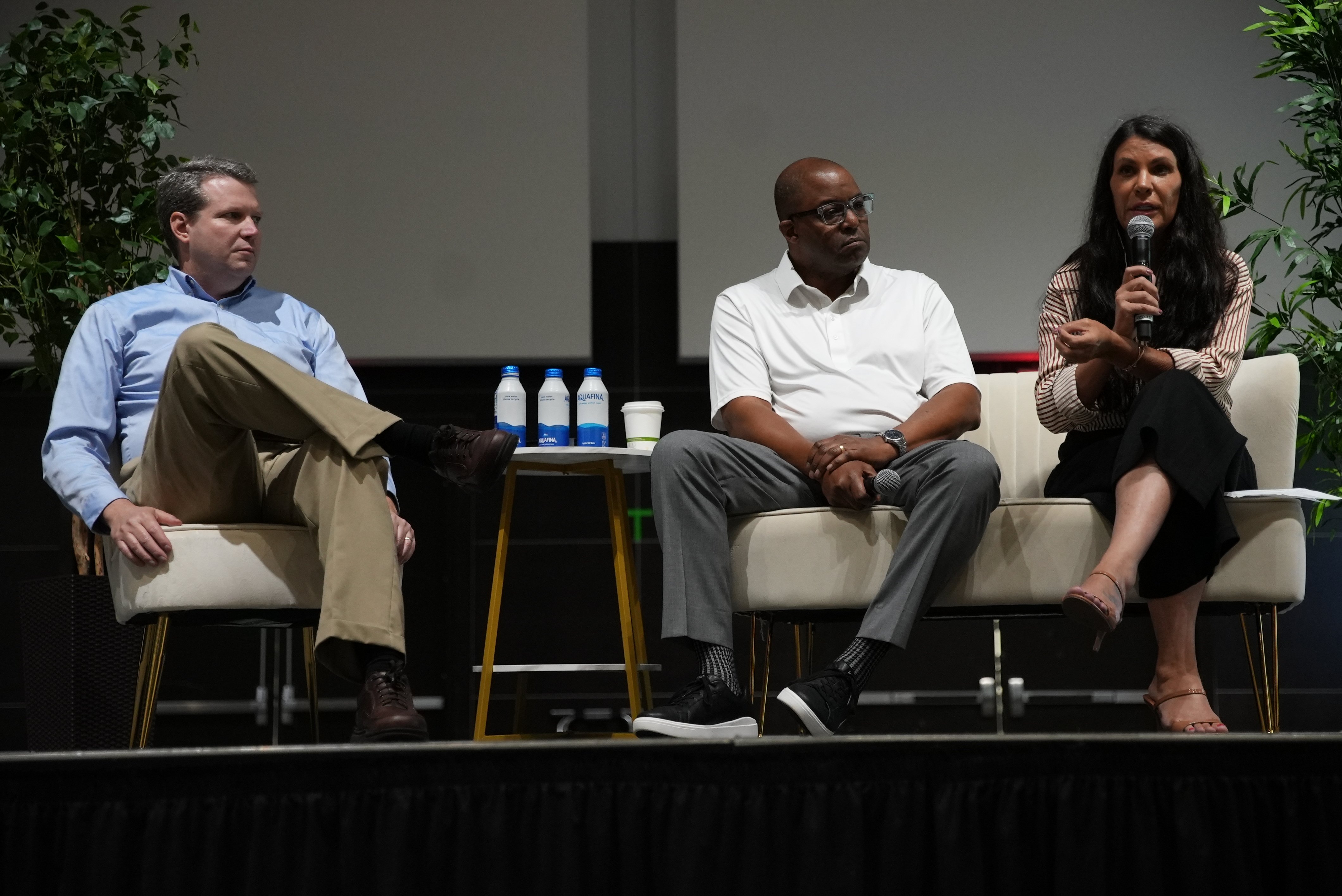
NeighborWorks® America’s Community Development Financial Institutions (CDFIs) held a convening in Miami Beach this month, part of the NeighborWorks Training Institute. The lessons from panel discussions to in-depth conversations will last long after the event.
Here’s a snapshot:
This is how Sir Vin Delights got its name, according to owner Donna Rose: Her husband is nicknamed Sir Vincent, “and I am a delight.” Her juices, sold from Miramar, Florida, now have a brick-and-mortar storefront. But she also has distribution to clients that including the Miami Dolphins training camp.
What an incredible week of learning, leadership and connection at the NeighborWorks® Training Institute. From exploring Florida’s community development evolution to strengthening boards and measuring community impact, the week was full of ideas and inspiration to take home. More than 1,500 participants promised to carry the waves of leadership forward by bringing what they learned back to their communities.The event ntributed over $5.5 million to the Miami Beach area.
Catch up on the highlights!:
Everything rises and falls on leadership, said Dan Ellis, CEO of NHS of Baltimore, “It’s the key to everything we do.”
He looks at leadership training like this: If your staff is such a large part of your budget, then not investing in them to help them be “as good as they can be” is just plain foolish.
The NeighborWorks Achieving Excellence Program, created for senior leaders in partnership with Harvard’s Kennedy School, is a quarter century old. That means it was high time for the reunion that was held during the NeighborWorks Training Institute in Miami Beach this month.
NeighborWorks® America knows it takes people with vision to bring the work of affordable housing and community development forward. During the NeighborWorks Training Institute in Miami Beach this month, the organization presented Visionary Leader awards to two people whose vision expanded community opportunities in the state of Florida: Ignacio Estaban, retired CEO of Florida Community Loan Fund, and Germaine Smith-Baugh, president & CEO of the Urban League of Broward County.
NeighborWorks® America’s Community Development Financial Institutions (CDFIs) have a significant impact on the nation’s housing and on businesses.
Good boards lead to impactful organizations. That’s the reason behind the training that NeighborWorks® America provides to board members and organizational leaders alike. All sides were represented this week during the Board Governance Exchange, a daylong convening so that board members and organizational leaders could talk about lessons learned and practical advice for effective board service.
Gabriel Figueroa had already been doing community engagement in Fitchburg, Massachusetts when Francisco Ramos, Community Building & Engagement director for NewVue, asked if he wanted to help with a program that would assess the needs of residents.

Get the latest in housing and community development trends and news.

Visit the NeighborWorks' store for homeownership resources.



1255 Union St. NE, Suite 500
Washington, DC 20002
202-760-4000