


Everything rises and falls on leadership, said Dan Ellis, CEO of NHS of Baltimore, “It’s the key to everything we do.”
He looks at leadership training like this: If your staff is such a large part of your budget, then not investing in them to help them be “as good as they can be” is just plain foolish.
Ellis spoke during the Solutions Lab at the NeighborWorks® Training Institute in Miami Beach this month. The topic, Investing in Leadership: Solutions that Advance Nonprofit Excellence, opened with Ellis’s panel, which also featured Arica Gonzalez, a community leader and Dorothy Richardson Award for Resident Leadership awardee; Jacqueline Caldwell, community leader, board member and “connector of the dots,” and Kareema Pinder, chief programs officer.
The panel, a close-up on one network organization that embeds leadership development in its culture, was moderated by NeighborWorks Chief Operating Officer Lee Anne Adams.
It’s critical to work with community leaders, Ellis explained, because they’re the ones who should be leading this work.
Gonzalez first became involved with NHS when she wanted to fix the crumbling infrastructure in her West Baltimore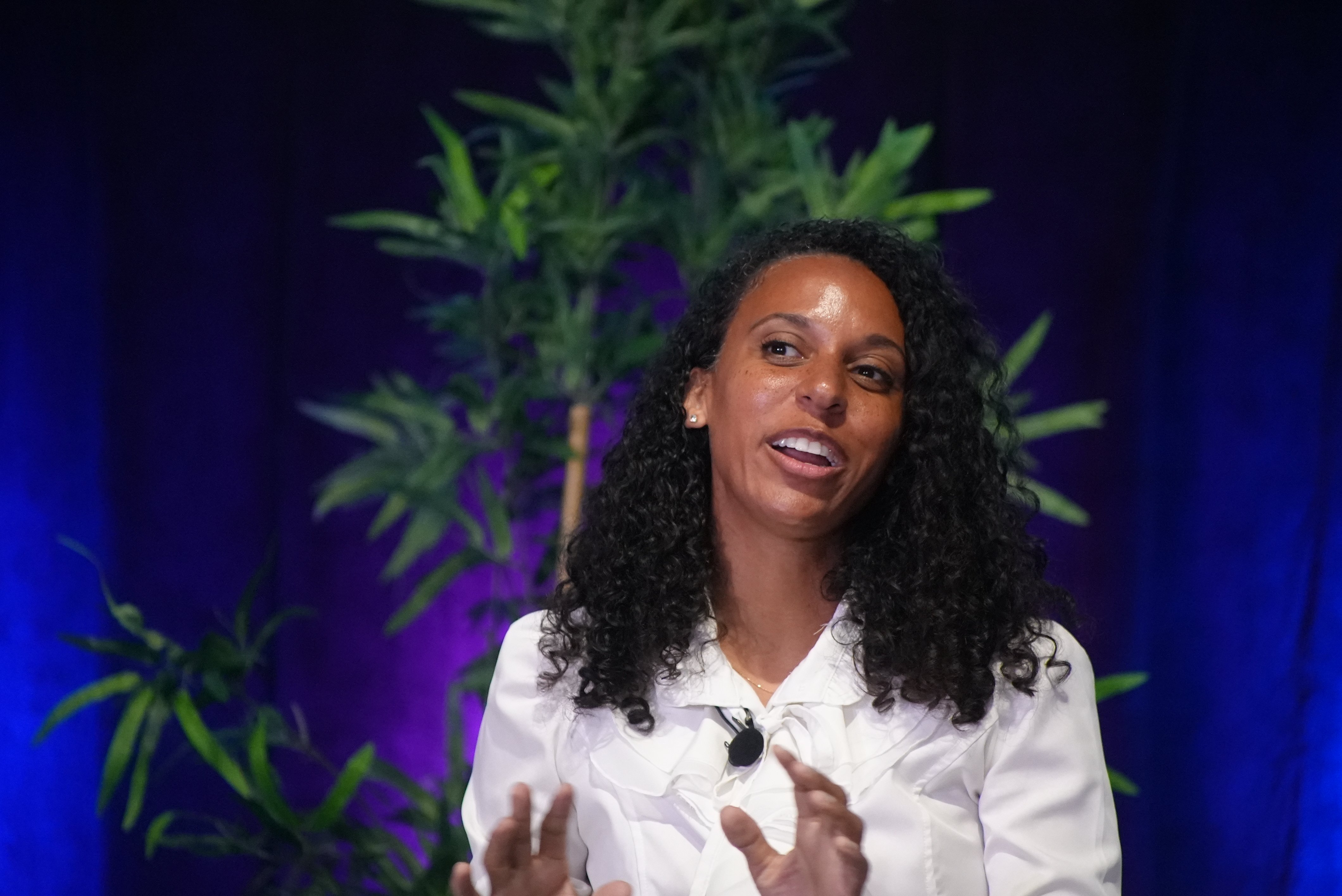 Neighborhood. There were rats and needles, she said. Whole buildings were falling down. Ellis came and took a walk around her neighborhood and joined neighbors for a Sunday dinner. “He listened to our solutions for the things that were plaguing us,” she said. And he empowered them to move forward.
Caldwell was the head of a neighborhood association and went to a meeting with the goal was to get porches repaired, she said. The agency she asked couldn’t provide the help. But NHS of Baltimore could, providing a grant for 18 houses in the Greater Mondawmin Neighborhood. “I was raised to believe it’s not where you live; it’s how you live,” she said. So giving back to her community was a given. And training to become a better leader was part of that, too.
“There are a number of ways we try to look at this across the organization and we do try to do it at all levels,” Ellis said.
Ellis himself went through the NeighborWorks Achieving Excellence Program in the wake of the uprising following the death of Freddie Gray in 2015. West Baltimore became his focus, he said. But to do more in that region, “we needed to listen to the neighborhood leaders from across the community.” And they needed to help hone those leaders. 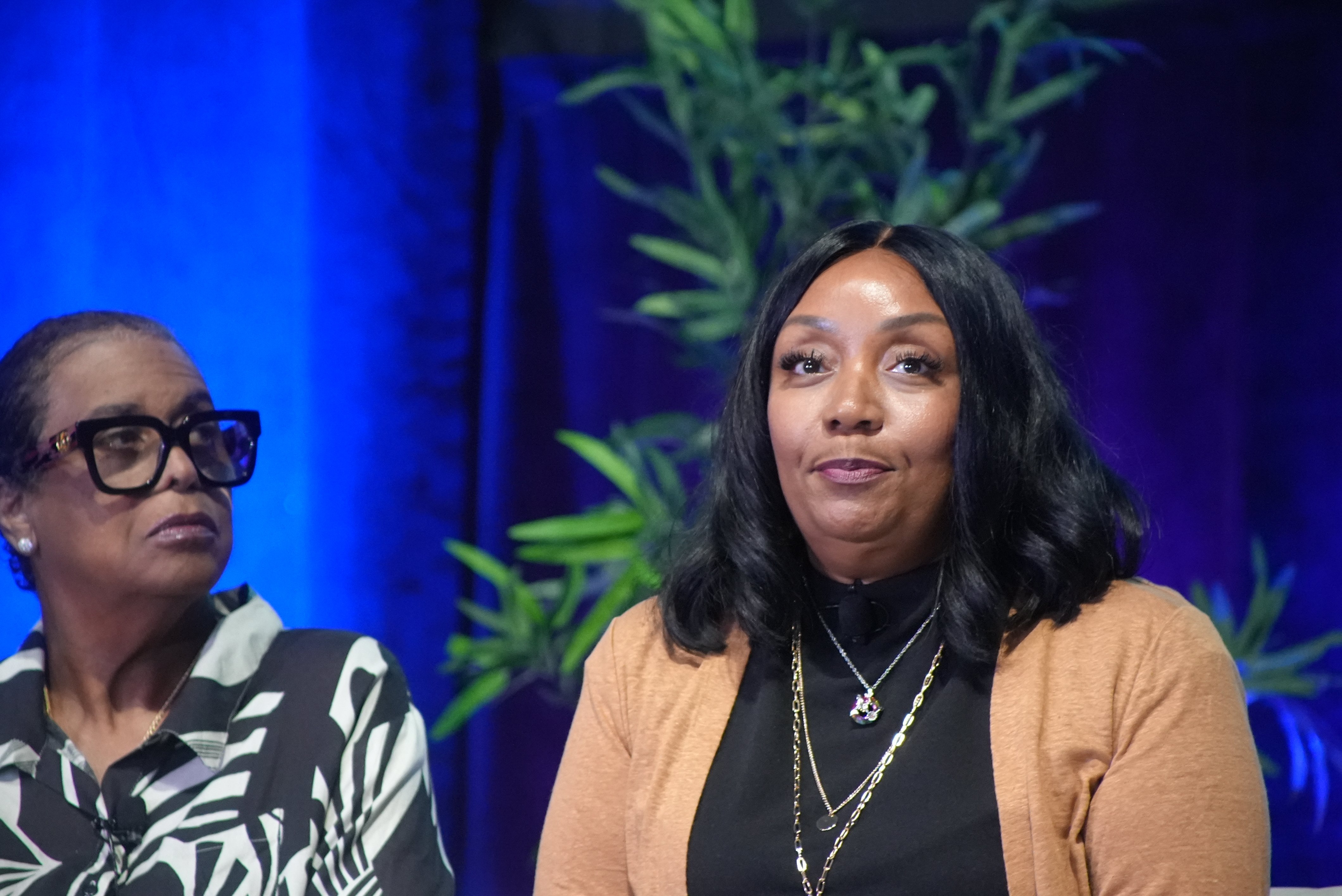
Ellis already knew about the NeighborWorks Community Leadership Institute, which trains community leaders to be more effective. But they couldn’t bring in dozens of leaders when the cap was usually eight per group. Instead, he worked with NeighborWorks’ training division and held a leadership institute in Baltimore. More than 70 people from around city came together to learn; local foundations provided financial support.
The organization’s board also participated in the Excellence in Governance Program and in a training-focused retreat. “It’s really about taking leadership from a philosophy and leveraging it for the strength of the people,” he said.
Pinder said it was important to look at leadership for staff from intake specialists to counselors.
“Everyone is a leader,” she said. “And we need to focus on their role because they are the leaders in the future of the organization.” Today’s leaders will retire someday, she said, so it’s essential for the team to be trained throughout. “When we look at staff, we are looking at the people who ARE the future. So growing them is really important. We are very intentional about thinking: Who do we want to invest in? How do we help them lead from their seats?”
Beyond the organization
Once leaders get training, they take it beyond the network organization into other facets of their lives. For Caldwell, it was her neighborhood organizations. For Gonzalez, it was developing more of a play for her nonprofit, Urban Oasis.
She had already been a community leader when she met Ellis, she said, and she had a vision of the future. “I just didn’t know how to make it play out.”
By learning from Ellis and through other training, she said, her organization grew exponentially.
Caldwell learned strategy, she said. “I came in as a leader but now I’m a better leader. Because you’ve got to sit in the room. If you’re not in the room, you’re on the menu.”
Planning for what’s next
Leadership training also helps with succession planning, said Pinder, who has been a part of building the talent pipeline at NHS of Baltimore.
“We want to make sure we’re developing people who are able to cross collaborate,” she said. “Who are ready to step up.”
Caldwell said her succession planning has been harder. “What we do is not a job; it’s a ministry. You have to feel it in your soul. Baltimore is the greatest city in the world. I believe that and I need for you to believe it, too. I’m hoping and praying more young people get the urge. I know they’re out there. It’s letting them know we want them to come in.”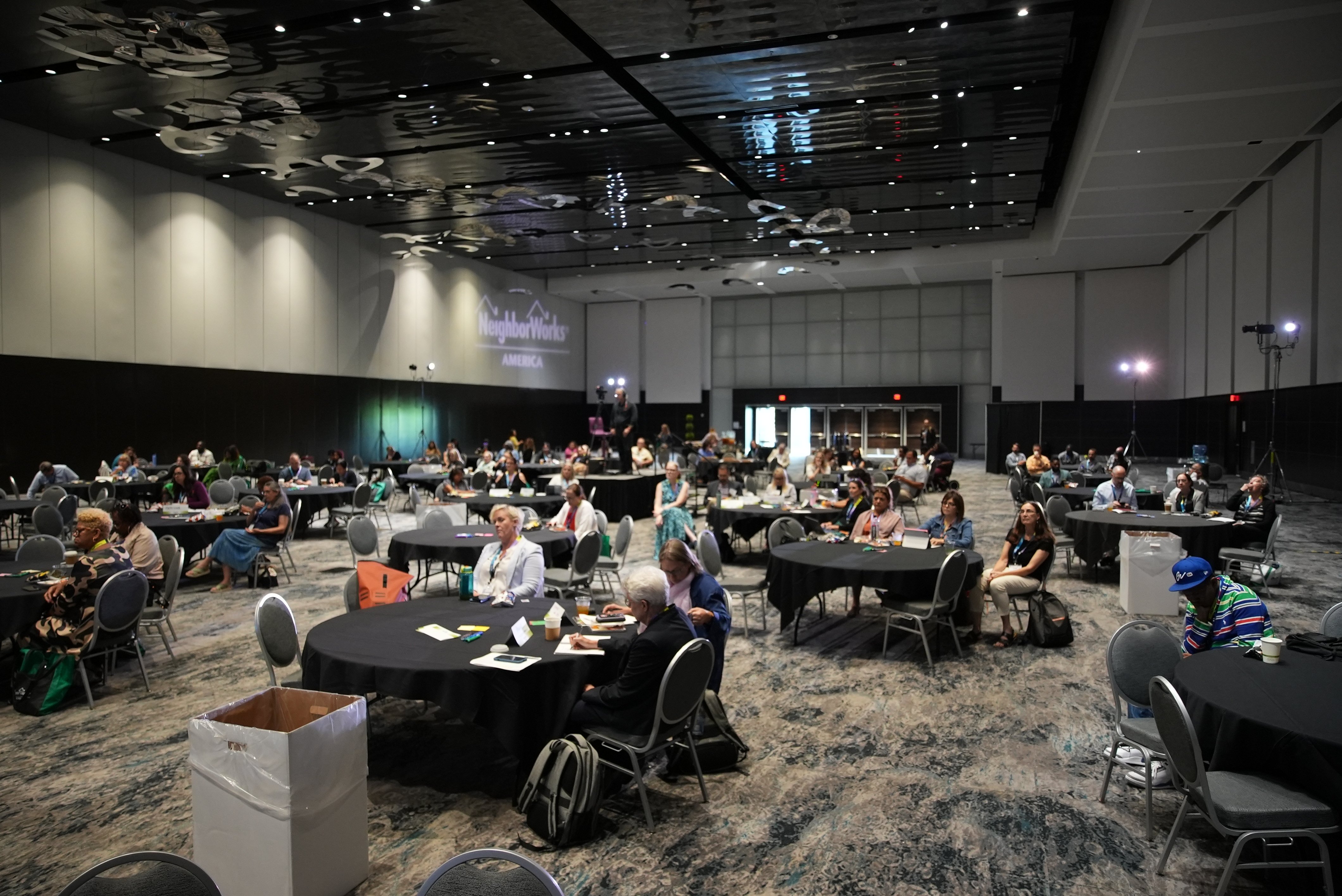
For Gonzalez, the teens she works with – teens who mow lawns, plant trees and keep the community connected – are already gunning for her job someday. “I can’t wait to give it to them,” she said. “We are each the developer of this place we call home.”
Ellis said training helps prevent organizational turnover, too. “When you invest in people, they want to stay.”
The day also included critical conversations and reflections from investors, including JPMorganChase’s VP/Market manager of Corporate Responsibility for Public Engagement Deborah Johnson and George W. McCarthy, Senior Advisor with the Lincon Institute. And it ended with commitments.
Pinder said that every time she attended a training institute, she took what she learned back home to her community. And that was a start.
Finding Solutions
Marietta Rodriguez, president & CEO of NeighborWorks America, helped launch this year’s solutions lab. 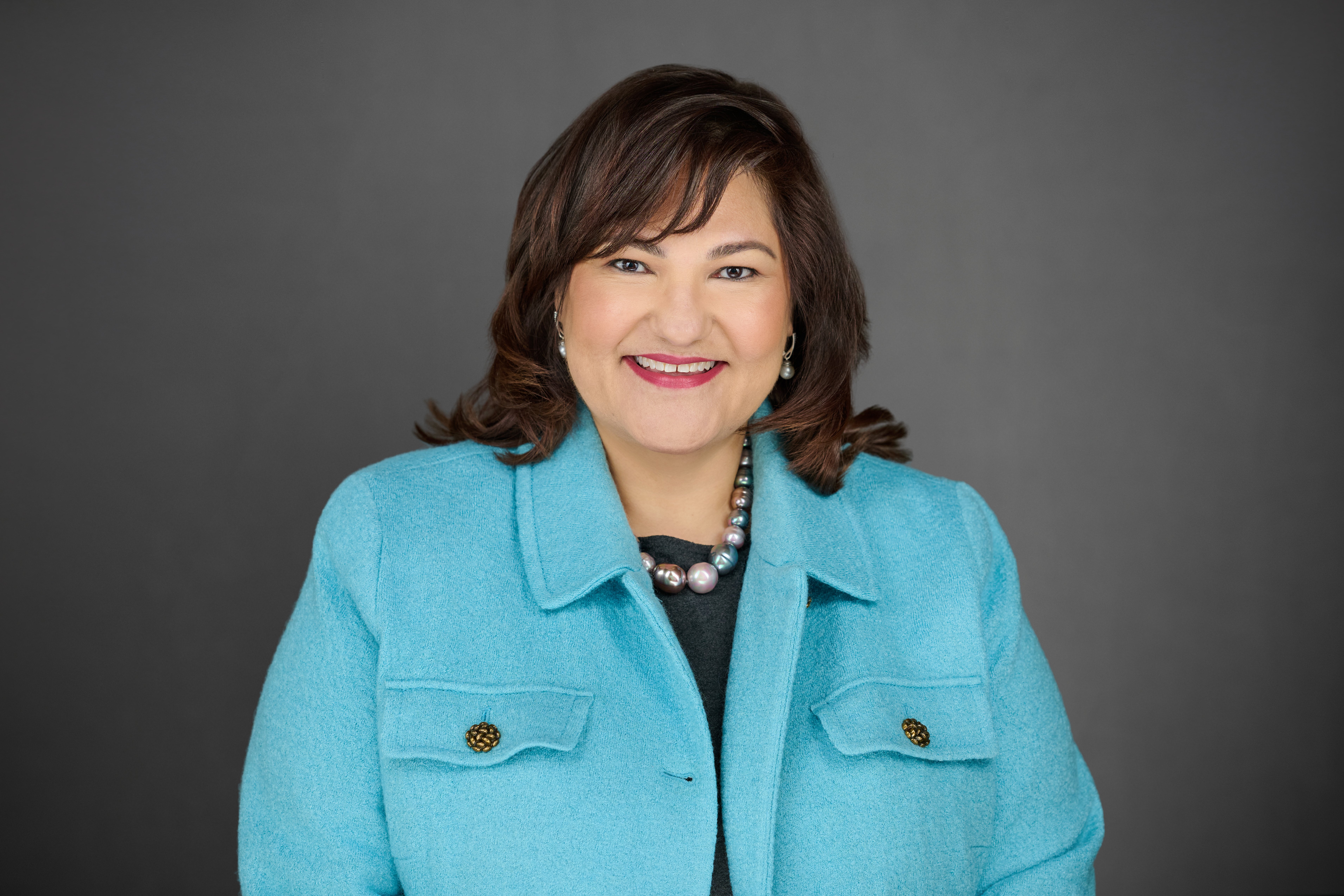
“As I look around this room, I see something incredibly powerful,” she said. “I see resident leaders, board members, people managers, senior executives, funders and partners. We each have different roles, different experiences and different perspectives, but we're united by one purpose: strengthening communities and expanding opportunity for the people we serve.”
That work has never been more important.
“Every day, we talk about the need for more affordable housing," she said. "We talk about preserving existing homes, increasing supply and creating pathways to homeownership. Those conversations are necessary, and they should continue. But today, I'd like us to spend time talking about something that makes all of those goals possible. Leadership.”
Housing doesn't build itself and organizations don't become stronger just because the need is great, she told the crowd. “Real impact happens because people choose to lead. People choose to invest in one another.”
Investing in leadership is a big part of that, she said, echoing "Waves of Leadership," the theme for this summer's NTI. Her hope, she said, is that the waves will be felt in communities for a long time to come.
Learn more about NeighborWorks America's training and some of the many tracks for leadership training and Excellence in Governance. Read more stories and highlights from the Miami Beach NeighborWorks Training Institute.