


It’s not difficult in parts of New Orleans where people earn the lowest incomes to figure out which houses were built after the flooding and devastation from Hurricanes Katrina and Rita. They’re often built higher, an extra layer of sustainability. They have hatches on the roofs, should residents need to climb to higher ground from the attic – something homes didn’t have during unprecedented flooding when the levees broke.
One tour guide compared New Orleans’ 9th Ward to jack-o-lantern teeth: an empty lot, a house, an empty lot, a house. The lots represent places houses once stood. If they stood for too long, without the occupant being able to afford repairs – sometimes due to a tangled title where they could not prove ownership and thus could not qualify for insurance or emergency funding – they could not be saved
A Resiliency Tour, hosted by the Real Estate Convening as part of the NeighborWorks® Training Institute on the 20th anniversary of Katrina, took participants through different parts of the city. There are places here, said James Ross, senior relationship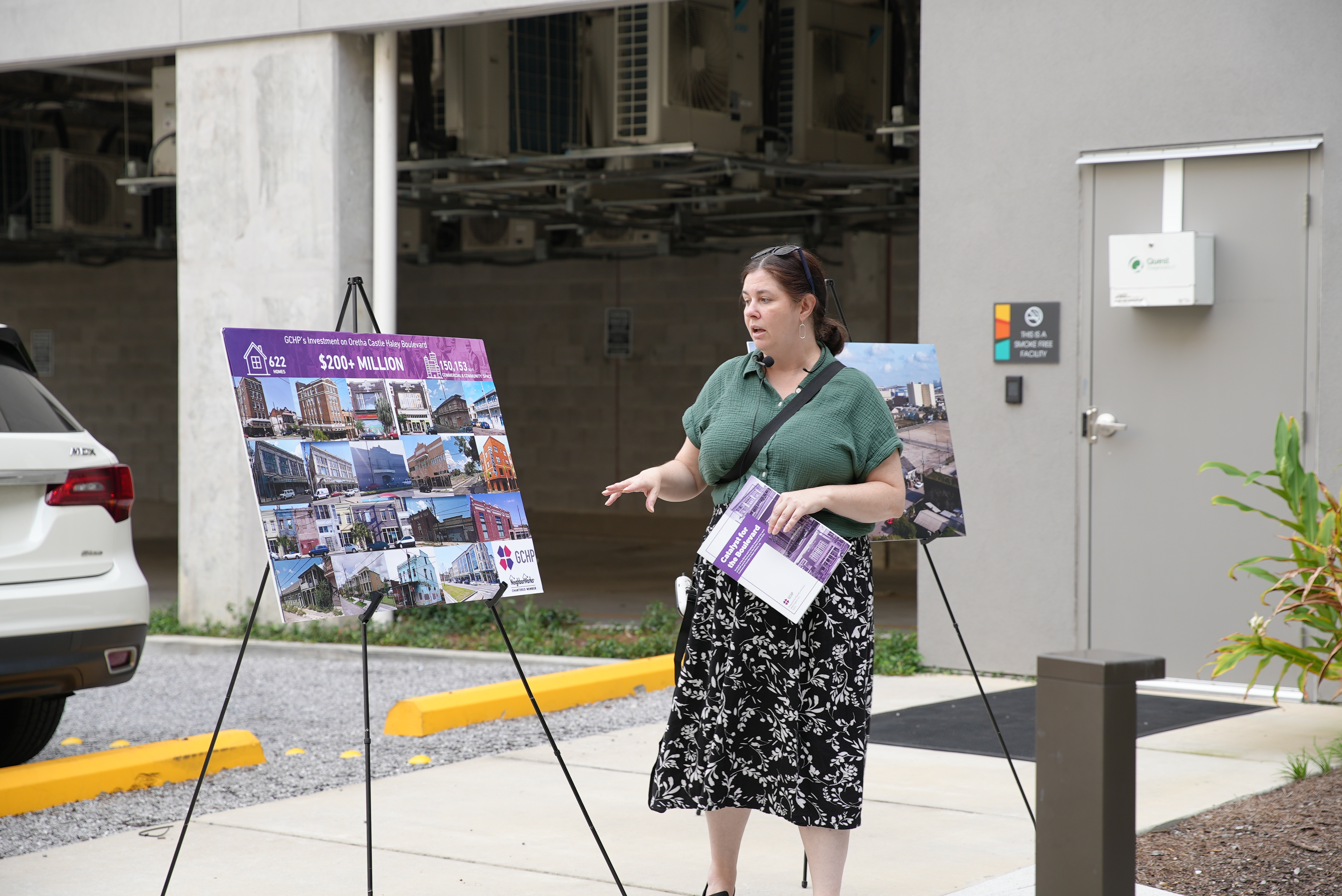 manager for NeighborWorks and a New Orleans native, where you cannot tell there was ever a storm that took lives, took homes, took trust. And there are places where it seems like it just happened yesterday.
But the tour included places that reflect determination, solid construction, and what people hope is the future.
The sun was shining over St. Martin Manor, owned and operated by Providence Community Housing, a NeighborWorks organization formed in the wake of the storm. The apartment homes are actually a part of the oldest development for older adults in the country, first operated in the 1800s to serve “elderly widows and children,” said Terri North, CEO of Providence. It then became a convent for Little Sisters of the Poor and eventually, St. Martin Manor.
While the development didn’t flood during Hurricane Katrina, it sustained other damage, including mold from sitting so long in moisture and humidity with no power. Insurance battles over the property, designated historic, continued, too, in the years before Providence Community Housing took over. But the development is now filled with affordable homes for residents and families with a large community room, manicured lawns and open spaces.
Twenty years ago in New Orleans, North said, “entire areas and infrastructures were completely wiped out. There was a huge loss of life, loss of housing, loss of infrastructure, loss of everything.”
But is resilience and the future they are focused on now. “That is what New Orleans is known for.” The theme for the city this week is: “Still Standing, Still New Orleans.”
To get to where the city is today, North said, took communication and partnerships. Her advice for other cities going through crises: “You need to start working with government agencies very early on. You’ve got to position your organization to get data and to communicate. You have to use your relationships.”
You also have to figure out where you fit in, she said. Her own organization has developed over 1,700 homes and apartments, and broke ground this week for more. The organization is in pre-development on 764 homes and apartments and looking to acquire another 800.
There are still enormous challenges, she said, but “I’m proud of our recovery.”
At Gulf Coast Housing Partnership, President and CEO Kathy Laborde talked about importance of health care, aligned with housing, and the organization’s Health and Housing Initiative. A health clinic stands adjacent to one of the newest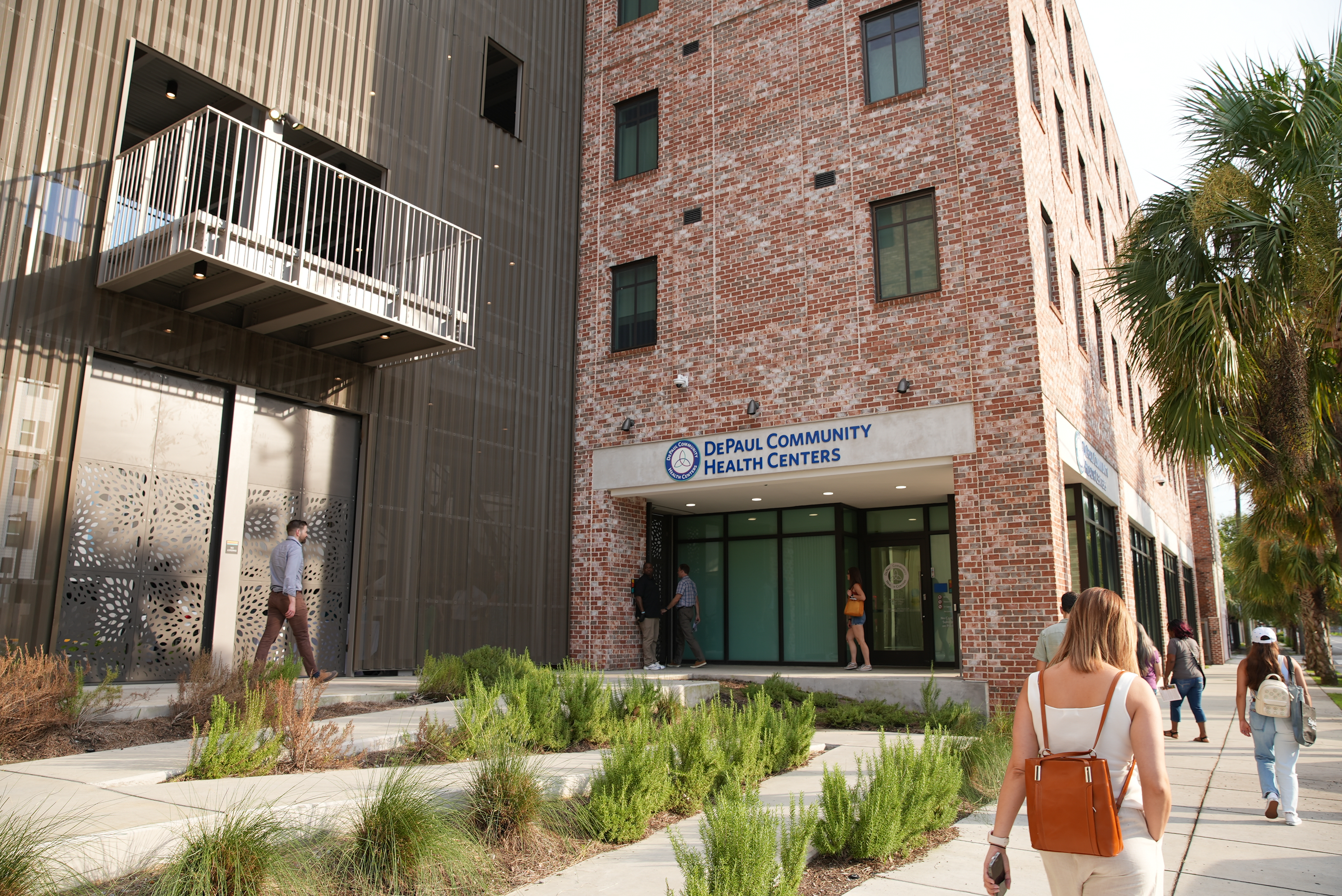 developments, H3C apartments, where there is also space to train 300 Community Health Workers – people who often serve as a trusted liaison between residents and medical professionals.
Gulf Coast is currently working to collect data so they can prove that the alignment between health and housing helps residents, cuts down on absenteeism from school and work, and cuts down on the need for visits to the emergency room. Kevin Krejci, chief capitalization officer for GCHP, said that the city has some of the worst health outcomes in the country. The hope is to track the number as it reverses.
The development includes 100 apartment homes for families and 92 for older adults. In New Orleans, people have some of the lowest incomes in the country; but building affordable housing costs the same as other locations, Krejci said. Funding the development included a partnership with Aetna and United Healthcare. “Kathy’s goal was to look at: Can we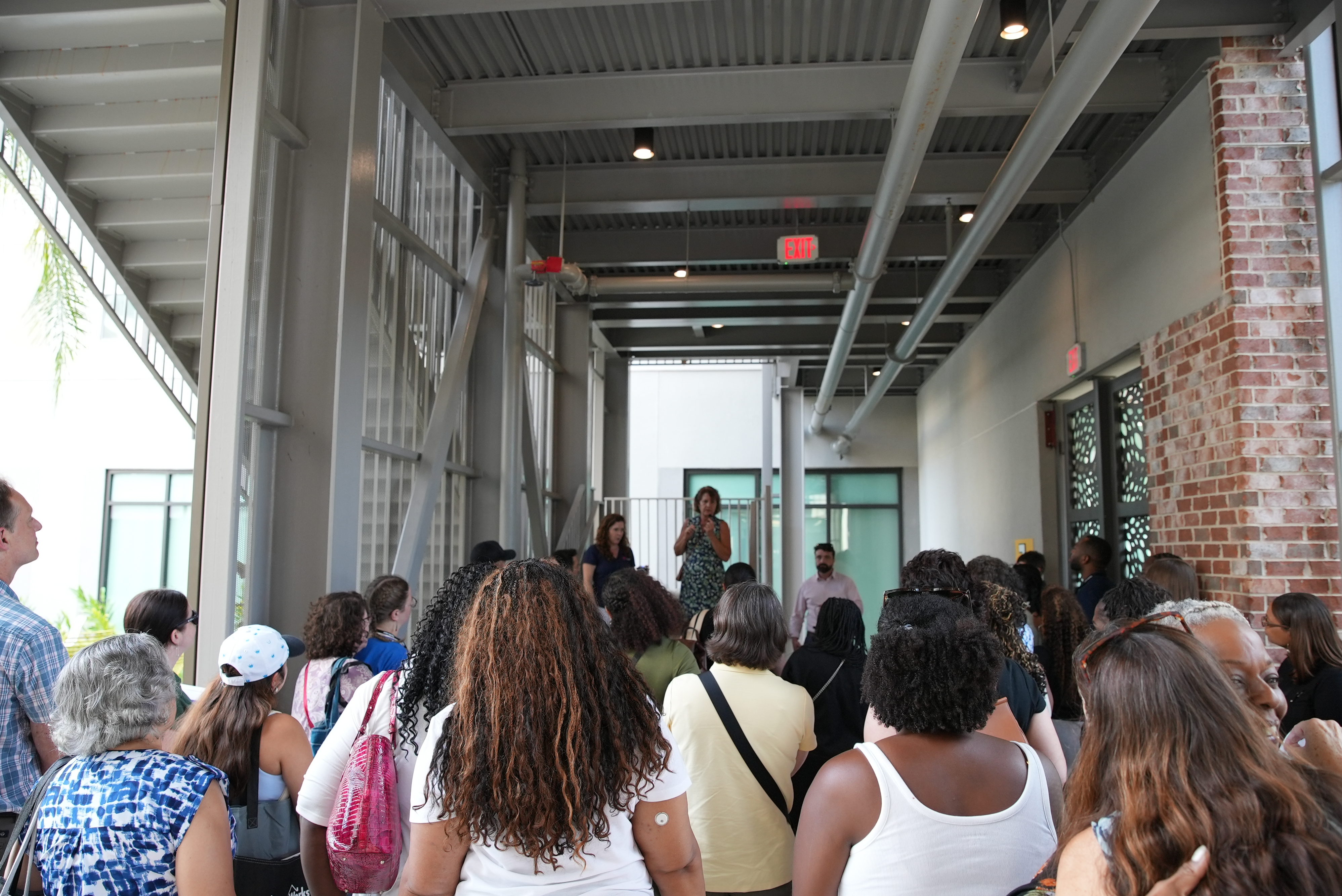 bring in a new concessionary capital source for a development – not something we typically use but something that might be scalable and sustainable.” GCHP has a similar complex in Mississippi.
The buildings were constructed to have accessible light, open air, views of nature – “the things research has demonstrated impact people’s health.”
Community health workers also engage with residents. “We want to use established science or protocol that will have an impact on health.”
The standing mantra for the corridor is “culture, commerce and community.”
Read more of our Hurricane Katrina coverage.