

On Season 2, Episode 1 of The Community Effect, NeighborWorks® America's podcast, we revisit Hurricane Katrina two decades later, and the communities and leaders who rose from the disaster to rebuild stronger than ever. Host Marietta Rodriguez, NeighborWorks® America's president & CEO, sits down with:
- Bill Bynum, CEO, HOPE (Hope Enterprise Corporation, Hope Credit Union)
- Terri North, president & CEO, Providence Community Housing
- Kathy Laborde, president & CEO, Gulf Coast Housing Partnership
You can listen to the podcast here.
The transcript follows:
The Community Effect: Rooted in Recovery
Voice over narrator: In every corner of America, there are stories of resilience, innovation, and the unwavering spirit of community. Welcome to the Community Effect, the podcast where we explore the intersection of community development, affordable housing and the impact it has on us, all stories of people and places transformed by the power of connection, collaboration, and a shared vision for a better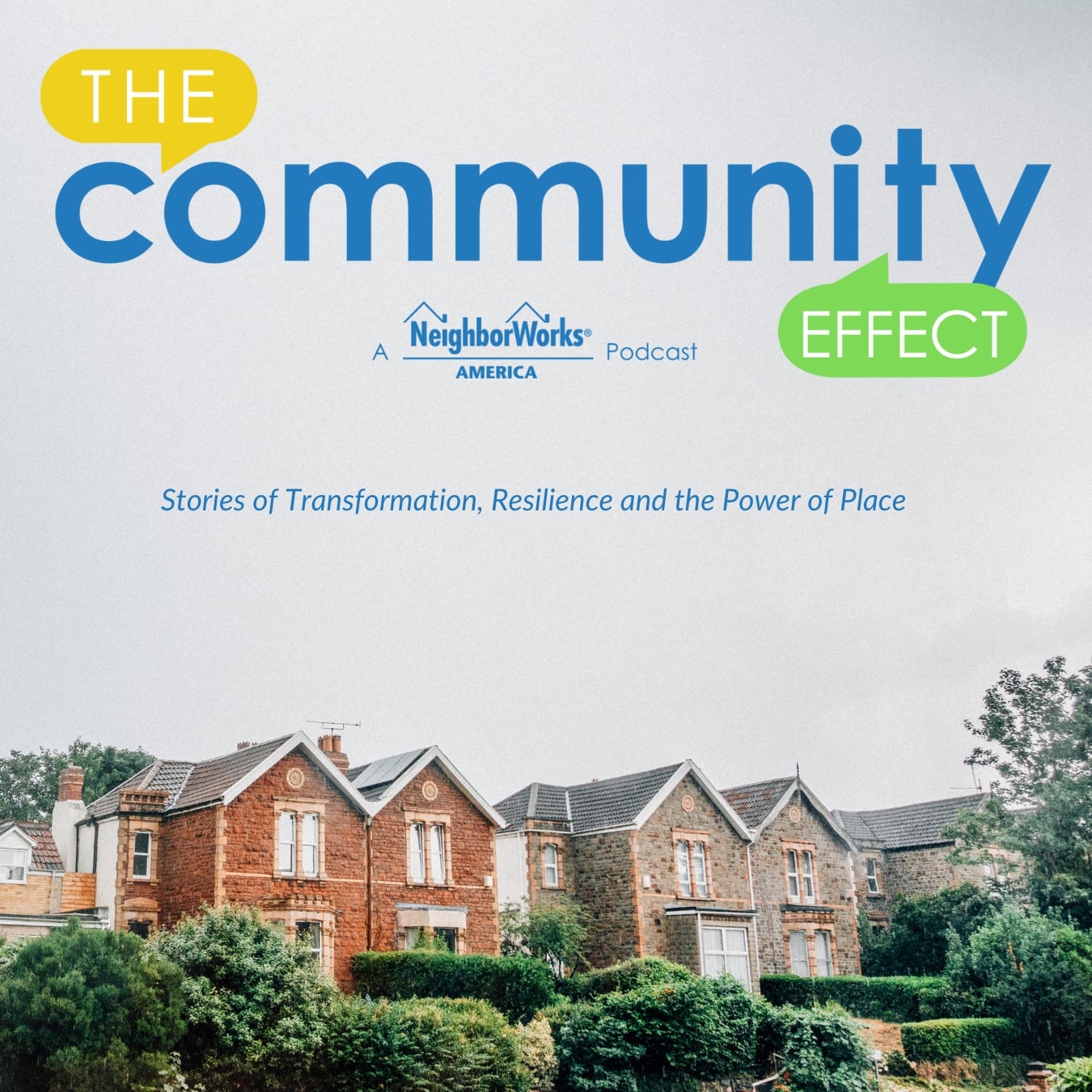 future. We'll uncover the blueprint for building thriving communities, one story at a time. The Community Effect podcast is hosted by Marietta Rodriguez, president & CEO of NeighborWorks America.
Marietta Rodriguez, president & CEO (Host): Welcome to Season 2 of the Community Effect, a NeighborWorks America podcast. I'm your host, Marietta Rodriguez. We're kicking off this season with a powerful conversation, one that looks back at a defining moment in our country's history and the legacy it left behind. It's been 20 years since hurricanes Katrina and Rita devastated the Gulf Coast.
During these storms, we saw communities uprooted, lives changed and lives lost. Dealing with the aftermath of the flooding, the path forward wasn't clear. But even in the face of devastation, something extraordinary happened. People rebuilt, leaders emerged, and hope took root. In this episode, we will revisit that journey and ask what lessons remain, what progress have we made, and how are the people of New Orleans and beyond building a stronger, more stable community?
Joining me today are three incredible leaders who have been at the center of the story of resilience from the beginning; leaders who didn't just rebuild homes, but helped communities recover with dignity, purpose, and strength. First, Terri North, president and CEO of Providence Community Housing. Terri helped launch Providence in the wake of Hurricane Katrina, and under her leadership, the organization has developed more than 2,100 rental homes and helped over 600 families become homeowners in New Orleans.
Terri, we're so glad you're here.
Terri North (Providence): Thank you so much for having me. It's an exciting time with the 20th anniversary. It's an opportunity to look back, but it's also an opportunity to look forward, so I welcome this conversation.
Marietta Rodriguez: Thank you for joining us. Next, Bill Bynum, the CEO of Hope Enterprise Corporation and Hope Credit Union.
Bill leads one of the nation's most impactful financial organizations. In response to Hurricane Katrina, HOPE supported the recovery of more than 15,000 households, businesses, and nonprofits. Since 1994, HOPE's efforts have benefited more than 3 million people across the deep south. Bill is a national leader on banking, housing, and economic mobility.
Bill, welcome to the Community Effect. We're so happy to have you.
Bill Bynum (HOPE): Thanks, Marietta. Glad to be here. You know, it doesn't seem sometimes like it's been 20 years since Katrina. We've learned a lot and hopefully we’re applying some of those lessons as we navigate the crisis of the day.
Marietta Rodriguez: Thank you. And finally, we're joined by Kathy Lebore, president and CEO of Gulf Coast Housing Partnership. Kathy founded Gulf Coast Housing Partnership shortly after Katrina and has gone on to develop more than 4,500 homes and over a million square feet of community-serving space. Her focus on building smarter, more resilient developments has shaped the region's long-term recovery. Thank you for joining us.
Kathy Laborde (GCHP): Thank you inviting me. I'm really thrilled to be here to share what we have learned and hopefully help you navigate a disaster that may or may not come to your community.
Marietta Rodriguez, President & CEO (Host): Each of you brings a unique perspective and just a wealth of experience on what it takes to lead through recovery and renewal.
So let's dive into our conversation. Let's take a moment to go back in time. Where were you in those early days after the storm, and how did your work begin to shift? Did any unexpected partnerships evolve during this time? We'll start with you, Terri.
Terri North (Providence): Immediately following the storm, obviously we were all evacuated. And so in our case, we were lucky enough to be able to come home about five weeks or so post storm. We were one of the early entrants, right? People couldn't come home for months and months. It was a lot of chaos.
So you have a lot of fits and starts about what you thought you should be doing. To be honest with you, I wasn't sure we should come back. I had two young children and I was concerned and I didn't, I didn't know. But we did have a home and our kids' schools got themselves back together and so we decided to come back, but largely at my husband's urging. I was really afraid. Because I didn't know we would be able to come back from this. And he said, well, Terri, if we don't go back, nobody goes back because we have the ability to do so. He was right. And the last 20 years have been about figuring out how we rebuild this community.
It's been an amazing adventure. Lot, lots, lots of challenges, but in those early days, it was really just chaos. You are hearing things through the grapevine. Remember, technology was not what it is now, right? We're sitting here doing a podcast. That was not a thing.
We didn't even have smartphones. So communication was very limited. You saw a line you got in it because you didn't know what they were giving away. You had to learn things by word of mouth and do a lot of outreach, to the extent that you could. You started trying to build your relationships back.
Marietta Rodriguez, President & CEO (Host): It must have been incredibly frightening and so unsettling, so uncertain. What about for you, Kathy?
Kathy Laborde (GCHP): I have to say that the biggest challenge of this podcast has been the reflection because I would prefer not to go back. At the time I was an independent developer and consultant, and my office was on Oretha Castle Haley Boulevard.
My husband and I had three children. We evacuated with 80 other folks and ended up about 160 miles northwest of New Orleans at a family compound. We couldn't move back home. So our immediate concern was what do we do with our children? We had to get them settled into schools and as the days went by, I was asked to serve as the co-chair of the housing subcommittee under the city's Bring New Orleans Back commission between the storms, aftermath and our eventual return to our home in December.
I was advancing a lot of the committee work. I was working on a low-income housing tax credit transaction in Baton Rouge and plus, there were many opportunities that were just presenting themselves because the people that were here were realizing that we were the ones that were going to have to roll up our sleeves and do something.
At that point, my worldview changed; it became much bigger.
Marietta Rodriguez: Thank you for stepping up, leaning in, in the time of just complete devastation and unsettling times. Bill, what about for you? What are your early reflections?
Bill Bynum (HOPE): I agree with Kathy. It's tough looking back and remembering how just devastating that time was for so many people.
You know, we had just opened our first credit union office outside of Mississippi on Oretha Castle Haley Boulevard in a property that actually Kathy had developed. We were organizing support. We had started to organize support down in Biloxi, and then on August 28 and 29, like so many people, were starting to get a sense of how significant this storm was going to be. And you know, our teammates down on the coast of New Orleans and Biloxi were affected just like everybody else: Property damage, displaced, their lives turned upside down. You know, I was here in Jackson and our damage was, -- it was a surreal time. We invited some friends from New Orleans who had left to get out the direct path to stay at our home. Some of our colleagues went down to the coast as soon as we could. They slept in cars, met with residents to start to learn and get a handle on what was going on, and determined if we could help.
We very quickly jumped into relief mode as an intermediary. People across the country and in the region knew what our mission was and were generous. We tried to get it to those who were most vulnerable, the lowest income folks who were -- it was very clear early on that they were not at the front of the list in terms of support from government programs.
And I think that's something we've seen, over and over in disasters: often the people who are most vulnerable and need help the most -- the programs just have not been designed to prioritize their needs. And so we were fortunately able to direct funds to local partners who provided food, shelter, tarps, relocation assistance.
I remember we were gotten some funds, we passed through to a group in Monroe that were working with families, giving them emergency cash assistance, housing assistance, clothing supplies -- that initial period of just helping people survive and get information.
Marietta Rodriguez: It sounds like the prioritization of those most in need should be a lesson that we should pull forward in other response efforts. Tell me this, what's something most people still don't fully understand about what it took to start the rebuild in the region?
Kathy Laborde (GCHP): We were devastated. You know, even moving back, I don't think people really understood. You can't get mail, right? We had to have central mail delivery. You go down to the Superdome, right? There were no birds. There were no birds chirping.
The birds were gone. Your neighbors were gone. There was no food on the grocery shelves. The gas stations were closed. You had areas that were still flooded. Not every area came back at the same timeline. So it was really a heavy lift for many of us, and many people had left, especially people, with children.
Once you have relocated your child, the last thing you want to do is upset their world again. And even with seniors, there were so many things that we just had to grapple with. I just don't think people really understood the magnitude of it. It was very widespread.
Terri North (Providence): There was no healthcare. If you think about that, if you get sick or if you're fixing your house and you fall off the ladder, there were very limited things you could do. No 911 for emergencies. As I said earlier, a lot of communication issues. So just to know what was going on and what the next steps were as a community was very challenging.
We made it an adventure for our kids and I think they're okay. But you do wonder about the trauma they experienced because it was like living in the wild, wild west. You know, they left home one day and they had a certain life and when they came back that life was not, not recognizable.
Marietta Rodriguez: It was not the same.
And the infrastructure that you relied on just to keep the trains moving on time, so to speak, were essentially gone.
Bill Bynum (HOPE): Something no one had experienced. There was no. blueprint for this. Regardless of how well-resourced you were, it affected everybody to a significant degree. And you know, as well intended as government efforts were, it took a while for the public money to flow, and so it was really on the shoulders of people, on the ground of neighbors, of churches, of nonprofits, of philanthropy, of people who care and wanted to do whatever they could to help people navigate. It was incredibly difficult circumstances. You know the flood maps changed, the height requirements on new construction changed. We turned to the private sector and fortunately, we're able to work.
We worked with NeighborWorks, we worked with Jim Barksdale, we worked with others who contributed funds and built some of the first homes on the Mississippi Coast after the storm, just seeing what could work. We didn't know either, but we talked with the local communities.
We got local builders, and we started building and actually learned. We tried to navigate an incredibly complex environment. I think making things even more complicated was the fact that there were so many people who didn't have a mortgage, they never had to navigate these kinds of relationships and getting financing and layering on and navigating all the requirements and regulations that would come their way. It was a maze to put it mildly and to expect people who were not well resourced to make their way through it unscathed was just not realistic. So it was really important to have the community of helpers come together again.
And I think churches and nonprofits were at the front of that effort.
Marietta Rodriguez: I want to talk a little bit more about that because I think this point that you brought up -- that this kind of event had not happened, there was no blueprint, there was nothing to refer to. It was very organic.
Your nonprofit organizations became pillars and go-tos in the community at a time of chaos and deep uncertainty. What did it mean to support people, not just by rebuilding the infrastructure or their homes, but helping them feel grounded? Like, you've both Kathy and Terri say we were struggling, should we go back? Does it make sense? People needed to feel secure and grounded again. And how did your organizations participate in just working with the community in that way?
Terri North (Providence): Well, Providence did a lot of outreach. We were already working with organizations like the Archdiocese of New Orleans here, and with the housing authority to reach out to people and find people where they were.
Unfortunately, as Bill has alluded to, those with the least got treated the worst. And many of those folks were picked up from the side of the road or off of a roof and brought somewhere. They didn't know where they were going until they got there. It's mind boggling. The amount of trauma with that is huge. People are in shock for quite a long time. People are paralyzed for quite a long time. So some of the, the organizations we worked with, we did our best through the grapevine and New Orleans is great with a grapevine. People know where their neighbors are, people know where their families are.
People know where their friends are.
Once communication was reestablished, I make that caveat because I learned how to text during Katrina. I never texted before in my life. But the cell phones weren't working, so you didn't even know where family was for a while. Once communication started happening again, you know: Where's Ms. Smith? Do you know where Ms. Smith is? Yeah. I think Ms. Smith is in Atlanta. Okay. How can we reach Ms. Smith? Do you know her family? We had a large group of people doing this big web of communication trying to put our arms out to people. And working with Catholic Charities in particular, they had a big philanthropy effort right after the storm.
And they had funds that they provided to certain areas where there was a concentration of people who had been displaced. Atlanta, Houston in particular, Baton Rouge, providing resources and literally tried to talk to folks, and to first of all, cry with them. Under understanding the pain but also understanding the anger.
There was a lot of anger and realizing that anger's not pointed at you personally, but it's a bad situation and people are really, really hurt. But what can we offer you with our philanthropy? In some cases it was a train ticket or a plane ticket to go somewhere else. In some cases it was getting them connected to the local housing authority if they were going to be trying to find more permanent housing where they are. So it was that kind of one-on-one. We had a lot of commonality, but everybody had their individual situation that had to be dealt with, whether they had a child with special needs, whether they had an elderly parent with them or an elderly parent -- they didn't know where they were. We actually went through that right after the storm. We couldn't find my husband's father. It took us a number of weeks to find my husband's father. So, you know, it's one of those situations where you take each, each step as they go.
In Baton Rouge, they were camped out in front of the Catholic Charities building. And we formed a line and we saw people one-on-one and we said, okay, what can we do for you? How can we help you? What is it you need today? It was survival. I think Bill was using that term.
It was about survival at that moment.
Marietta Rodriguez: The picture that you paint about not having technology and just putting the word of mouth and the tentacles and trying to locate everyone. It's a very vivid picture.
One of the things that so many of us appreciate about the region, about New Orleans and Louisiana in particular are, you know, just the deep and rich history of the city. I'd be interested in hearing how the traditions or the values of the region influenced the work and how partnerships came together as a result.
Kathy Laborde (GCHP): I'd like to address that. Because it absolutely framed the work of GCHP. There's no question. Before the Katrina, there was no GCHP, so it was really my involvement in the community and just getting to know, as others did in the city, we knew each other, and the organizations kind of knew what everybody did.
People knew who's doing what, et cetera. And so there was a high level of trust amongst some organizations. So when the catastrophe hit, it did a lot of smart people. Along with smart people comes some good ideas, but if you really understand your region, your culture, your traditions, not all good ideas are good ideas, right?
And so I think it was really, really important to, to remember what happened the day before Katrina, you know, while you're then trying to build a new world. And that's the ethics of GCHP. People had great dreams before Katrina. Okay? They didn't give up on those dreams. What Katrina gave besides chaos was a lot of folks and money that were willing to help.
And I think Bill alluded to it too. You have to be able to understand when you have to help people. You have to be their partner. And if you understand the culture and traditions, you know, when you could be a good partner. And this was that time.
Marietta Rodriguez: you have to see people where they are and appreciate their story and make time to listen and feel that pain with them and as you said, Terri, sometimes even feel that anger. Kathy your reference to GCHP is your organization, Gulf Coast Housing Partnership. I just want to make sure folks are tracking with that. Terri, I’d like to pose a question to you. Providence was launched in, as I understand it, in direct response to the housing need after Katrina.
What's a decision from those early days that helped Providence build credibility and frankly momentum for the work?
Terri North (Providence): Well, going back to what I mentioned earlier, I think our partnership and work in the Catholic community with Catholic Charities in particular did have some initial credibility.
As well as the fact that we were doing outreach and people knew that we were trying to help people where they were, letting people know that we intended to make it a priority for them to come home. And we were very, very clear about that: This wasn't going to become a city just for those who had the money to come back home. Just for those who didn't flood. We wanted all these folks to be able to come back home. Home is such a huge thing for anyone, for any human being. But most importantly in New Orleans home – it’s hard to even articulate what it is, but people have very deep roots here.
Very deep.
Especially with the seniors that we reached out to, they just wanted to come home and we tried to tell them, it's going to take time, but we're making this commitment to you. We're going to bring these places back and we're going to bring you home. That's all they wanted to do. And unfortunately, it's a sad thing to say, but many of them said: I just want to come home, even if it's to die.
I want to come home. I don't want to be in this strange place. Because it's the only community they ever knew. So home is very important and we made sure we knew people could come home. That gave us credibility.
Marietta Rodriguez: I see you're getting emotional about it. It's hard not to. Home is grounding. It's where you're most comfortable, frankly most familiar.
And I understand the draw to be home. So thank you for sharing that. I'm going to pivot a little bit here and go to Kathy. You've been a leader in building a resilient, future-ready, if we can call it that, housing. Can you share one design or development innovation that you think every storm-prone community should consider?
Kathy Laborde (GCHP): I think it's important that people really do understand we have short memories as human beings. There's nothing lovelier right now than driving along the Gulf Coast of Mississippi. It's been rebuilt, okay? It's bigger and better than it was before Katrina. Right. And so I think it's important to understand human beings as Terri said, just want to go home.
So if you really intend on going home, our hope is that you build better. And the building codes did change after Katrina. They got much more robust. But our neighbors in Alabama have spent a lot of time and effort developing fortified construction. GCHP believes in building certified, fortified, along tier-one insurance risk, which I know Terri knows all too well, which is coastal risk.
It's not one thing Marietta, it's a series of building components. It is more expensive, but it's now the science of actually proving that it works. So I would encourage that the communities, if you want to put people in harm's way, then protect them.
Marietta Rodriguez, President & CEO (Host): Can you give us a couple of examples?
Kathy Laborde (GCHP): The basic component is the structure is all tied to the foundation, so it's less likely to blow away. Once you lose your home, there's nothing to come back to. If you can keep the roof on the house, chances are your house will be habitable after a storm. It may not be pleasant, but you'll be able to move back there and that is the most important thing in a recovery to get people back as quickly as you can. So the state of Louisiana is now granting money to residents to put fortified roofs on.
So I guess I would say to folks: start there.
Marietta Rodriguez: That's really powerful. One of the real gifts I think of the NeighborWorks network is this power to share and convene. As you're talking about these experiences, it reminds me of conversations I've had with Lori Gay at NHS of Los Angeles, also a NeighborWorks organization. She's in the eye of that rebuilding in the week of the fires of Altadena and Pasadena. And one thing that she shared with me in the early days that I don't think that you all had the benefit of, just as the fires were sort of being contained and we were starting to understand and comprehend the vast devastation and impact, she got a call from our NeighborWorks organization in Hawaii who had been through the Maui fires, and that executive director, Reina Miyamoto said, look, I can send you documents and processes so that you can stand up a response effort in those communities in a matter of days as opposed to trying to figure that all out from scratch.
And that was a huge leg up. But for them both being part of NeighborWorks, they wouldn't have had that relationship. And so this example, Kathy, that you're sharing about the roof and the foundation -- these kinds of examples of lessons learned can be really powerful for other communities so that they, we don't have to relive the lessons again.
Bill Bynum (HOPE): I think that played out. With Hurricane Sandy, I think a l lot of the lessons that we experienced from Katrina and Rita were helpful to our allies, to our colleagues in the Northeast as they were responding to Hurricane Sandy. So I think that exchange is critically important. I wanted to go back to a point you raised about the culture.
I really think it's important that in addition to all the things that we all benefited from regarding the people coming together and helping their neighbors, it's also important to understand that the difficulties that we experienced after Hurricane Katrina were exacerbated by some of the history.
And, you know, the patterns of who lived on high ground versus people who lived and who had to live in places that were more likely to flood. People with fewer resources were at a severe disadvantage. And so I think the importance of neighbors of faith aid groups, of nonprofits, philanthropy, people who care, they always stepped in to fill the gap and that was particularly important during Hurricane Katrina.
And it is continues to be important during times of crisis.
Marietta Rodriguez, President & CEO (Host): I appreciate that very much. Absolutely. It matters where people are living and what resources and infrastructure they have around them.
Bill Bynum (HOPE): Policy matters to a significant degree. Our response was a combination of programs.
You know, we had data. All of us saw what was happening. We were closest to the ground and we were in a position much more than the people who we were serving, to take those data and jump on the table whether it was with national organizations, with policy makers. Here are the critical things that you need to take into consideration as we navigate solutions. You know, one example, the state of Mississippi created a recovery fund for homeowners who lost homes to storm surge. They didn't live a flood zone, but they had property insurance and those homeowners were going to receive $150,000. But homeowners in the same situation did not have property insurance were only going to get $50,000 and those were much less resourced people who experienced the same damage, probably even more so because they were more vulnerable, and it was just inherently unequal. And we were able to do the analysis and show the state they could afford to give everyone $150,000 grants.
And ultimately, working with allies, the public pressure and the data were able to move the state to increase the awards to a hundred thousand, not equal, but significantly more than it was. So I think, you know, it really underscores the importance of folks on the ground taking data and amplifying the voices of those who are often not heard.
Marietta Rodriguez, President & CEO (Host): Great example of how data, the power of data, can influence a pretty significant policy. That might be the example that answers this next question, Bill, but I'll ask each of you: Looking back, what's one decision your organization made in the years after the hurricane that you were particularly proud of? Sometimes in the moment we don't know that we're making a decision that's going to be really impactful and really, and looking back like: Yeah, that was really the right call. Are there examples for your organizations?
Bill Bynum (HOPE): For us, it was decision to lean in to really go deep and do whatever we felt we could do.
We understood that HOPE doesn't exist for me or my colleagues to have a job. You know, our mission and values require a lot more than that. And we were able to deepen and develop relationships, capabilities that have served us well there. We couldn't do it all by ourselves.
And so the collaboration and the really stepping up on behalf of our communities is something that has become more ingrained in our DNA. Because I think as we've all experienced the crisis -- while Hurricane Katrina was incredibly devastating. We've had the great recession, we've had the pandemic, we've had political shifts that create all kinds of uncertainty and trauma for our communities, and they rely on organizations like ours to step into the gap.
We learned what we were capable of during Katrina, and that has served us well over the years.
Marietta Rodriguez, President & CEO (Host): What about for you, Kathy or Terri? Are there decisions your organization made that you're really proud of?
Terri North (Providence): I'm proud of a lot, but I think the one where we really stepped out and made the most impactful decision was to agree to work with enterprise community partners to redevelop the public housing at Lafitte. We are actually just getting ready to finish that last piece of that project -- this is phase seven of the project that we have been working on for all that time. But I’ve got to tell you, I mean, that was scary stuff and we had no idea what we were getting ourselves into.
No clue. I'm extremely proud that we have stuck with it and the impact that we've been able to have on the Treme community which is very close to the French Quarter in downtown. It is an area of opportunity, but had it become disinvested over the years and then Hurricane Katrina, obviously was very difficult for this community.
We wanted to make sure that this didn't become an area that was totally gentrified and people were not going to be able to live here. So that was part of the efforts with rebuilding the public housing site. It was being densified and made mixed income, but we tried to replace as many affordable units within the community as we could.
We built homes for sale in the community, and tried to make sure that the people that had roots here and the people that worked near here had the ability to live here and stay here. And so I think that's probably one decision I'm particularly proud of. Usually when you're scared to death, that's usually a sign you're about to do something that's risky, but also has the potential to have a great amount of impact. And, and that was one of them.
Kathy Laborde (GCHP): I was echo what Terri said about there being many, but if I'm going to talk about one, which is a seniors deal that was also combining permanent supportive housing at the time.
Folks may or may not know that after Katrina, permanent supportive housing became really woven into many of the transactions that we were doing through Louisiana Housing Corporation. But this particular transaction…
Marietta Rodriguez, President & CEO (Host): Can I interrupt for a moment? Can you explain what we mean by permanent supportive housing?
Kathy Laborde (GCHP): Permanent supportive housing is made available to folks with challenges that are very low income. So they're coming to your venture with both a housing voucher and case management support. There was a very politically well-connected opponent that caused long story short, we couldn't get the transaction advanced.
The Department of Justice took notice and sued both the State Bond Commission and the City of New Orleans on our behalf. Is was really impactful from an organizational perspective, it caused such angst at the board level. And this is a true story folks, I honestly had created a GCHP's board with both local and national board members because I thought it was very important that we learn from folks that were doing this much more robustly than we were across the nation.
But we also needed to, as I said earlier, honor where we live, right? Our board members, our local board members, did not want to fight this fight because they knew the political hit that we would take. Our national members insisted we fight the fight. We fought the fight and we won. So I think it was a really important, from a organizational perspective, that the board accepted the challenge and stood firm during the fight.
And that as an organization, we had other partners involved with this. It was very stressful for all involved, but at the end of the day, we got it done.
Marietta Rodriguez, President & CEO (Host): Congratulations. That's a great example of leadership in the wake of a lot of stress and pressure. That's a great example. Let me ask you this, after Katrina many traditional banks and lenders were either inaccessible or frankly just slow to respond to the needs of the community and HOPE stepped in to provide capital and financial services when others couldn't or wouldn't frankly. How did your approach reach people and businesses in that moment? How did you approach that and what helped you become a reliable resource that was trusted when frankly, trust in financial institutions was maybe at its all time low.
Bill Bynum (HOPE): You know, it's interesting. I think we saw that we were in a unique position pretty early in the days after the storm people, businesses closed, boarded up, but our manager would go into our office and would be there by herself, opening accounts because at the time you had to either have a bank account to get your FEMA payment or your insurance check, and so many people were underbanked or unbanked. And so we were able to pull together resources from philanthropy and [undistinguishable] and create what we call Power of Hope accounts and seed accounts.
So the people could open an account to start to receive their FEMA and insurance payments. And, and Lynette Collins, who was our manager, would be in that office by herself and other businesses along the boulevard had been, and were being looted. There was crime around, but for some reason we were in a bubble.
And people, I think, realized that we were of the community and were there to help them get back on their feet. And I think that’s something that we built on, throughout the whole, in the subsequent months, I think started to build a relationship as a non-predatory partner because there was a lot, there were a lot of sharks in the water.
As Kathy mentioned earlier, there was a ton of money, more money than this region has had ever seen before, and there were scam artists looking to separate people from their money, and source of banking services. But an advisor to help people manage those resources, I think was critically important. And we were able to do that, but we were also able to do it not just because of HOPE’s reputation, but we had trusted advisors that partnered with us, the nonprofits, churches, others who lent their credibility to us.
And we were able to step in and be a resource for people who were being preyed upon, quite honestly, during a really difficult time.
Marietta Rodriguez, President & CEO (Host): Terri, Providence serves a wide range of residents from older adults to multi-generational families, many of whom face challenges around mobility and caregiving, or very limited incomes.
What are some ways your housing developments are designed to support residents long-term health and daily needs and just sense of stability?
Terri North (Providence): Very similar to how we did outreach, we do service coordination, which is very much a one-on-one, situation. Again, everybody's situation's a little bit different. There are commonalities, but everybody has specific things. So our service coordinator try to assess what people need to keep them independent, to give them some quality of life and try to make those connections and access those connections we have in the community. So in the community, we're out there always trying to find third party service providers, program providers that we can work with and bring into our community, or at least make connections between our residents and those third party providers.
We do some services directly, but mostly it's the connection. We are not a service provider. We are a houser, but we know our folks need a lot more than just the bricks and sticks. So what can we do to connect with the community on their behalf today?
Marietta Rodriguez, President & CEO (Host): In your view, what does being prepared look like today versus in 2005?
Bill Bynum (HOPE): As I mentioned earlier, crises continue. They're more frequent it seems, whether it's manmade or natural. Our communities are experiencing whiplash and severe difficulties. The lessons that we gleaned from Hurricane Katrina -- we built significant project management capacity, a lot of moving parts and being able to navigate those and keep the effort moving forward.
We built some capabilities that we used over and over since then. But I think more importantly: the relationships that we established with so many other organizations, collaborating with mission-aligned allies has more and more been the center of our work. And it's really grounded us and put us in a position to, I think, be more prepared as these events continue really anchoring us. People deserve our best and those who are most vulnerable need it more. And we want to anchor our work in a way that that prioritizes them and in their realities and structure solutions that respond to their needs.
So I, those are lessons that we have taken away and that help us to be hopefully more prepared as these crises continue to come.
Marietta Rodriguez, President & CEO (Host): So what I'm hearing from you, Bill, and frankly both from Kathy and Terri, is the power of partnerships -- that communities need to be very or are already interconnected, but really leveraging the power of the partnership in each other's strengths can be a real asset in responding to a crisis.
So now we've, we've talked about lessons, we've talked about those early days. Let's take a look at the future. What's one change you would recommend to make future disaster response more effective? I'm sure you've thought about that. What are your suggestions there?
Terri North (Providence): The issue with us, you know, obviously it was sort of unprecedented at the time. Now, as, as Bill alluded to, we we're seeing a lot of disasters. There's enough lessons learned and there's enough programs and things put in place that we know are effective. So why aren't we repeating those and why aren't we getting that moving much faster at a governmental level, at both the federal level? But states also can communicate and help each other.
I know actually with a lot of disasters, Louisiana gets called, the people that worked in this through Katrina and other disasters, they get called quite a bit for their expertise, which is great. We don't want to have to reinvent the wheel every time, and it takes too long for money to move.
We need to find a way to make that happen faster.
Bill Bynum (HOPE): I would say invest in, in an organization like Providence and Gulf Coast and HOPE, you know we've, as Terri said, we've learned we shouldn't have to relearn and we also shouldn't have to start from a negative position every time one of these situations emerge.
We've got organizations like ours and others who know what it takes to help communities navigate these circumstances, help communities be more resilient. I think not just invest in our organizations, but invest in these communities so that they can be more fortified and able to withstand these situations.
When they, when they inevitably come again.
Marietta Rodriguez, President & CEO (Host): I think that's an incredibly important point about community investment, not just at the time of disaster or some issue, but really long-term investment. Because what we're finding, we saw it in Katrina, we saw it Superstorm Sandy, we frankly saw it in the pandemic that communities relied on trusted organizations, community-based organizations, and those organizations that were well known and had relationships in the community became building blocks and real resource hubs for people to get information and access resources, but without them, without long-term investment, that not only are they here for the disaster, but after as well is critically important. So I think that that's a real key point.
Kathy Laborde (GCHP): I think it's really important, particularly for NeighborWorks members, to understand your job is to make sure your organization is ready. To make sure that you can operate in the event of a disaster to make sure you are prepared, because if you are a trusted partner, all eyes are going to be upon you, right?
And so that is not the time to decide whether or not you're connected remotely or you know where your employees are. You have to plan for that. And that's really vital. I can't overemphasize that. You have got to make sure that you're ready, that your doors are open. And I didn't experience that in Katrina.
There was no organization, we didn't have all these apartment complexes that house people. So this is, I mean, you've got to be ready for things that you don't expect.
Marietta Rodriguez, President & CEO (Host): Be ready for the unexpected. I think that's incredibly great advice. Yes, exactly. Exactly. Let's close with this. I'll give you each chance: What can't afford to forget? Fill in the blank.
Bill Bynum (HOPE): We can't afford to forget that we had to fight for the resources that our communities needed and we should never take for granted that the people we serve would be left out if someone is not there fighting on their behalf.
Terri North (Providence): That is very similar to what I thought. It's important that organizations like HOPE and, and Gulf Coast and Providence, but many, many others, hold that place at the table for those that are not being included. That is what we need going forward.
Kathy Laborde (GCHP): I agree. I mean, Don't forget to look out for each other.
Marietta Rodriguez, President & CEO (Host): We're all in it together. Right. I am you. You are me. Absolutely. Well, Terri, Bill, Kathy, thank you for sharing your stories. Thank you for sharing your experience. Your visions on what comes next, what you're working on. I think the work shows what it really means to be rooted in recovery. And I thank you for all that you do every single day.
Terri North (Providence): Thank you. We, we really appreciate NeighborWorks. Without NeighborWorks I'm not sure we'd be here today, so appreciate all of the support.
Bill Bynum (HOPE): I'm inspired by Terri and Kathy and NeighborWorks and glad to be here with you all. Thank you.
Kathy LaBorde (GCHP): Thank you, Marietta. Thank you for being our partner.
Marietta Rodriguez, President & CEO (Host): It is our pleasure. And hearing your stories of recovery and resilience and what you all faced in those early days, and where we are 20 years later. I'm sure there are places that there's still a lot of work to do, but the ground and the road that you all and have walked and where you are now is incredible.
So thank you for all that you do. And to our listeners, thank you for joining season two, the premier of the Community Effect. We hope this episode reminds you of the power of place, the strength of community, and lasting impact of leadership born in crisis. This season will continue exploring what it takes to build opportunity, one story and one conversation at a time.
Until next time, I'm Marietta Rodriguez, and this is the Community Effect.
Voice over narrator: This is the community effect brought to you by NeighborWorks America.