


Monica Dixon hadn’t heard the term “passive home” until she was looking at buying one. But two things became clear soon after she talked with NeighborGood Partners, the NeighborWorks® network organization that created the first passive homes in the state of Delaware.
“It was going to be energy efficient,” she said. “And cost efficient.” The combination was important to her. 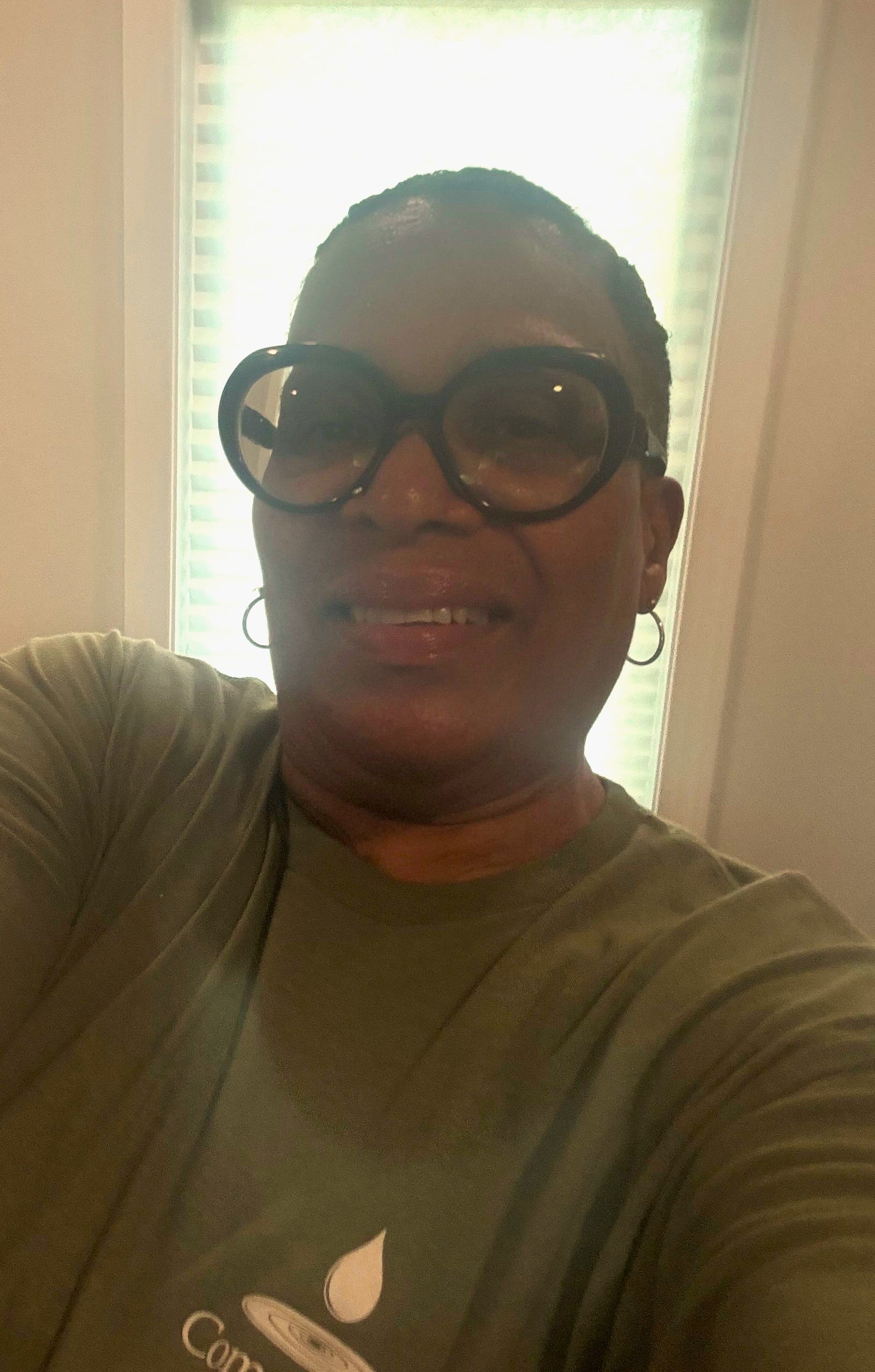
Monica had been living in the home she’d grown up in, an older home she’d inherited from her parents. That home was the opposite of efficient, she said, and her energy bill showed it each month. She’d had an air conditioner in each of the bedroom windows. Every month, she’d had three energy bills: oil, gas and electric. Now, she has one.
Her new home feels healthy and comfortable, she said. It has large windows and open spaces. And even over a summer with record-breaking heat, “I could walk into this house and it’s cool, you know what I mean? It’s just cool.”
A different way of constructing homes
For NeighborGood Partners, the construction process for their four passive homes was not business as usual. They worked with New Ecology, which has helped create thousands of dwellings that are Phius certified, and partnered with Energize Delaware, which helped with the gap in funding, said NeighborGood Vice President for Real Estate Development Patricia Kelleher.
When they first embarked on the project, NeighborGood was thinking less about becoming the first Passive-certified dwelling in the state and more about curbing the local housing shortage. But they knew the homes (would benefit the homebuyers further by being able to withstand increasingly extreme weather and reduce energy consumption. They would also be more affordable, deliver healthy indoor air and increase sustainability.
“We restricted sales to clients in our homeownership education program,” Kelleher explained. “We wanted to sell to households already committed to this type of education and working toward homeownership.”
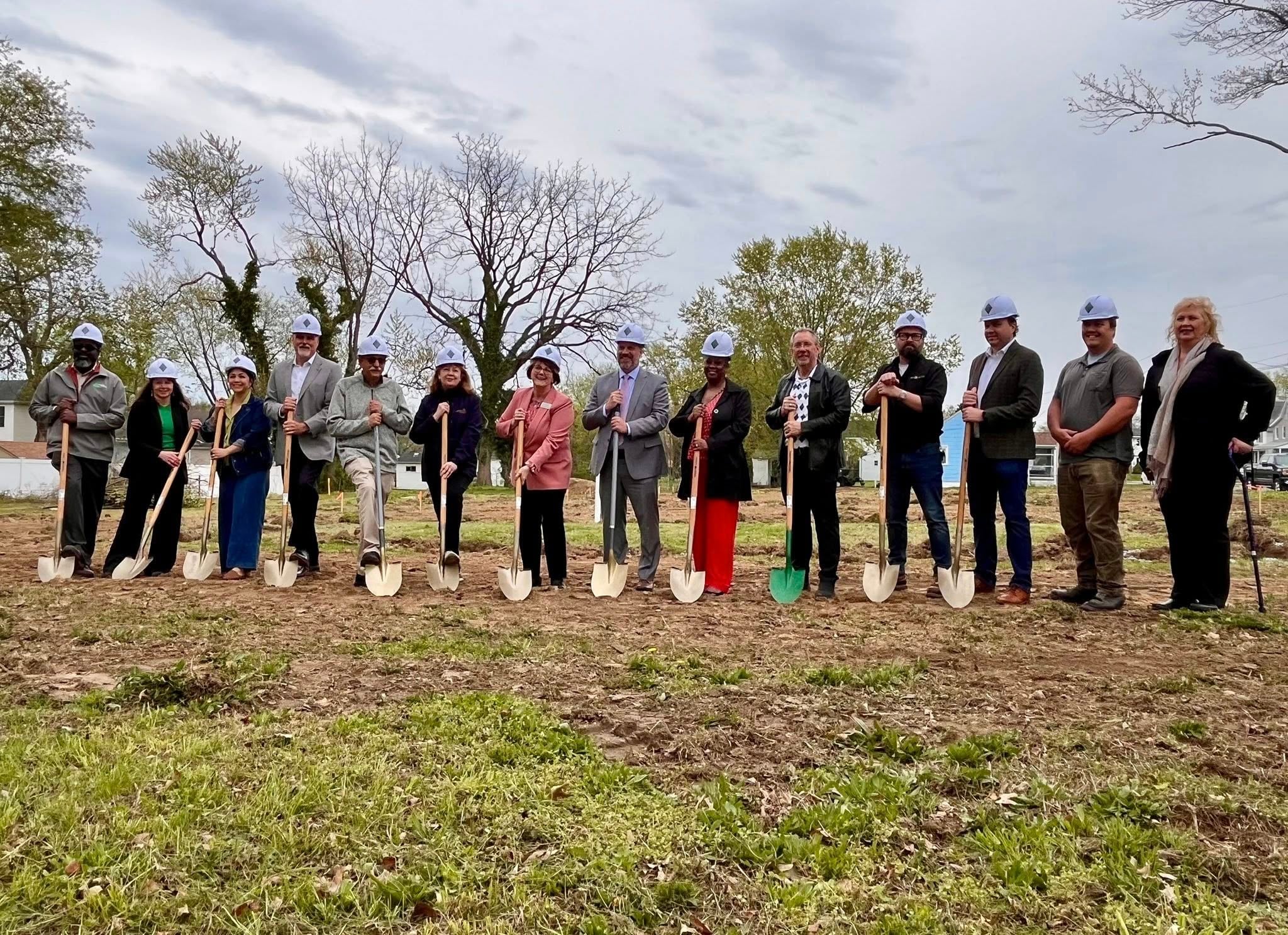
Those qualifying for the homes had to be from Delaware, and were given more consideration if they lived in Dover. “We had a lot of interest,” Kelleher said. “The comfort and the energy bill made a great selling point.”
New Ecology’s Norm Horn works directly with builders and designers, getting them comfortable with what the process looks like, helping people understand the difference between a passive home and typical market construction. He also gets them familiar with the costs and the benefits.
The first passive home was built in 1991, but in Delaware, it’s still new, Horn said. It’s more entrenched in states like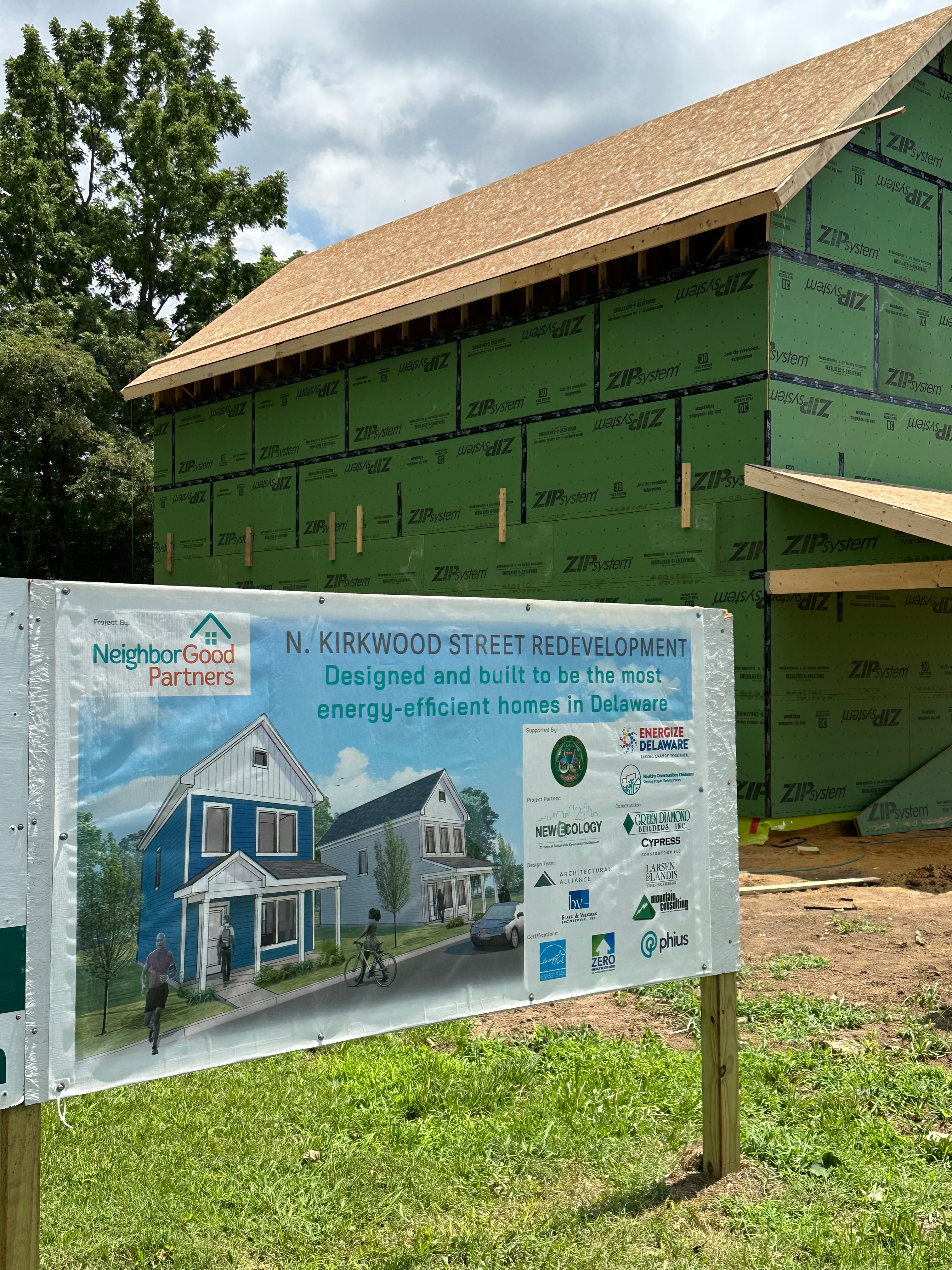 Massachusetts, where certain jurisdictions require larger multifamily buildings to meet passive house standards. But the construction model is gaining traction nationwide. Ten years ago, he said, the only windows that could achieve passive house level performance had to be shipped from Europe. Today, they’re also made in the U.S.
The goal of a passive home is continuous affordability, Horn explained. “A house that costs very little to build up front isn't necessarily affordable if it costs the owner or the resident an energy burden to run this thing through the hottest months of the summer and coldest months of the winter,” he explained. “This is affordability through efficiency.”
How affordable? The number Horn hears most is a 70% to 80% reduction in heating energy costs, which adds up over the lifetime of a home.
A passive home is rooted in building science. “The basic idea is that we're going to build the building that needs the least amount of active inputs and energy to heat and cool it. That means we’re going to focus on insulation in the walls, under the floor and at the roof. Air sealing and highly efficient windows are also critical measures that must be considered and done correctly.”
It may sound unexciting, he said, to talk about “the envelope airtightness” or “high-performance windows.” But these things can make a huge impact, along with high-performance mechanical systems that include filtration, heating, cooling, ventilation and dehumidification. And consumers are definitely excited by the savings on energy bills.
“You have to view a house as a system,” he said. “Think about the design, the materials, the construction methodology and how it all fits together to make the whole greater than the sum of the parts.” 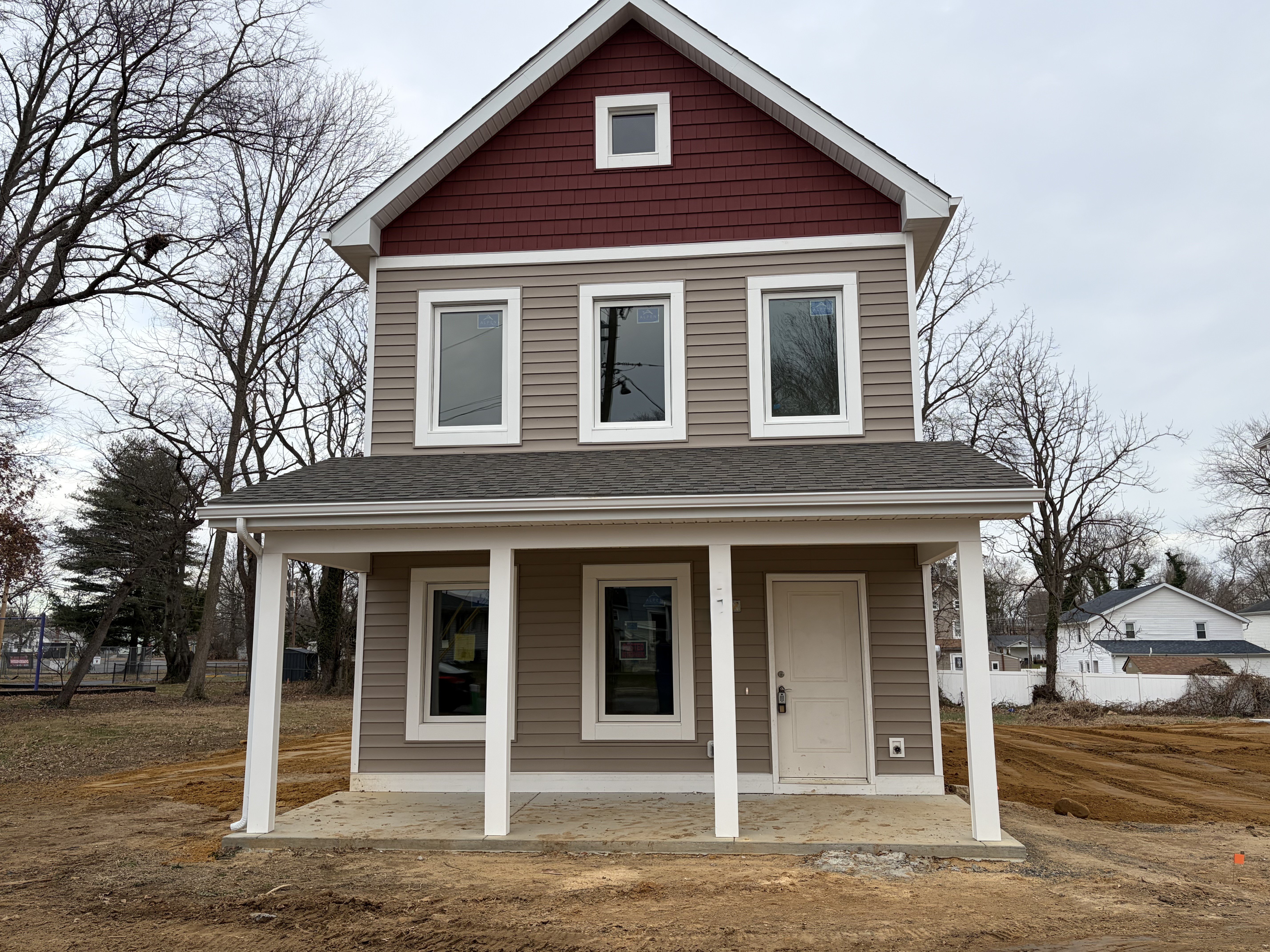
They focus on mechanics, Horn said, on bringing fresh air from the outside and exhausting the stale air inside, “and then recapturing heat between those two streams so that we're not dumping cold air into a living space in the winter, nor are we dumping hot air into a living space in the summer.”
As part of a partnership agreement, New Ecology will gather systems data from the four houses for several years. Through remote monitoring, Horn can tell how many kilowatt hours of electricity each house is drawing – which is currently about half the average for homes of a similar size.
While there are many benefits to a passive home, there are also more up-front costs, Horn said. Working on a larger scale – with multifamily homes, for example – helps curb the numbers. “You’re not going to create your first one off the production line for the same cost and time and investment as your 100th one, " he said. His hope is that developers won't be discouraged by initial costs of the first project, and that they'll take the second step, and second effort, to continually improve.
A change in production
Frank Datillo has been a project manager with NeighborGood Partners for years. “This was my first go-round with a passive home,” he said. Along with the builder and the superintendent, he took a weeklong course on the technology and building methods for passive homes. In the beginning, he said, there was pushback from the tradespeople. “They were like, ‘this is overkill. Just overkill, you know?’”
But the end product was incredible, he said. The blower door test, which uses a fan to measure air leakage, showed .017 for a 1,680 square-foot house. (A 1.0 is considered excellent and the code requirement is 3.0.) 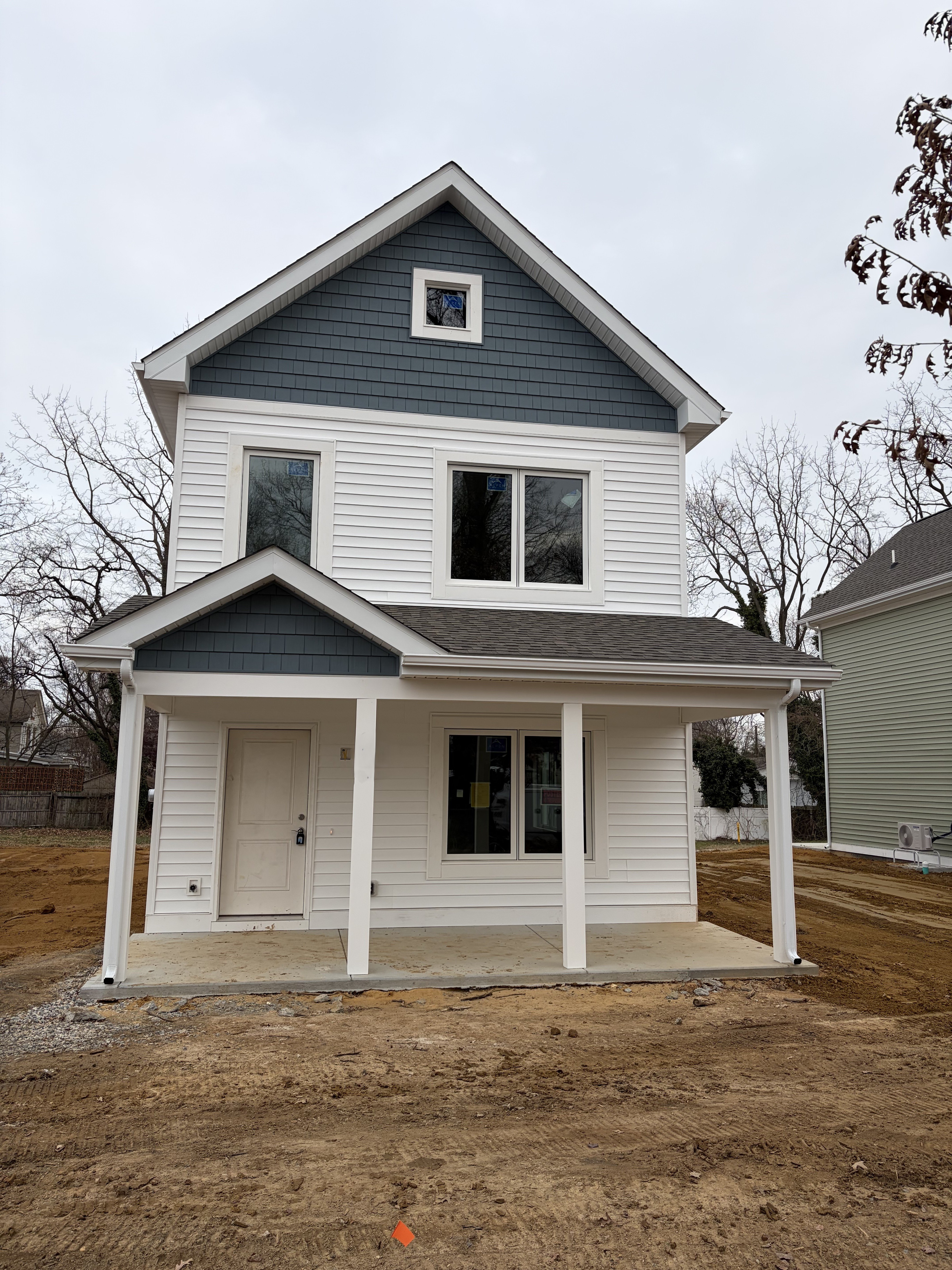
Horn explained that the metric measures air leakage through the building envelope in cubic feet per minute, per square foot of envelope area at an induced negative pressure. In layman’s terms: In 20 mph winds, the Kirkwood Street homes would be 10 times tighter than the code-required threshold
“That’s unheard of,” Datillo said. “I think it was the best number that even the HERS rater had seen in residential.”
The process for building the new homes was educational, he said, though he admitted the cost – without the grants – would have been prohibitive for single-family homes. He estimated the price at about 32% over the usual market build, though in this case the grants from Energize Delaware offset the difference in cost.
But there are things he learned through the process that he will use again, even if the next homes for NeighborGood are not for a passive build. “We're certainly going to try to take what we’ve learned and incorporate some things to make our homes more efficient for the buyers. Because the pocketbook – this really makes a difference for our clients.”
Things he’ll look at again: Insulation. Better south-facing windows that seal more tightly. A Zip System. A heat pump water heater. “So we’re really looking at some of the systems.”
In the future, Datillo sees passive homes becoming more common. “For us, it was important to try to get ahead of the curve,” he said. Plus, “we’re giving families an affordable house, and the cost to live in that house is going to be significantly reduced also.”
Across heating and cooling and electric, projections estimate energy costs at $1,500 a year for one of the three-bedroom homes, which sold for around $275,000 each. In his own home, he said, “I couldn’t get close to that.”
“The real challenge is just bringing the contractors in our region to understand the methodology,” Datillo said. “It's a different building process. So it’s really getting the tradesmen schooled up to the point where they felt comfortable with the process.
“The best part is we were able to get the house so tight that all of the systems were going to work as efficiency as possible. And the families are really enjoying the benefits. I’m an old-school builder. But to put our name on something of that magnitude – to be the first in the state? I think it was a great effort, a great team effort between NeighborGood Partners, New Ecology, Energize Delaware, Green Diamond Builders.”
Building for the future
Taking on a passive home for the first time can seem complicated at first, said Horn. “But it gets faster and easier each time.” His hope is that as people learn more about the project, “it will be an inspiration for someone else to say, ‘Hey. I can do this, too.’”
For the next few years, Horn will continue to monitor Monica Dixon’s energy bills to gather data that will help with the next build. Monica will continue to monitor them, too.
Right now, she said, “It’s doing what it’s supposed to do. The bills are lower.” And in the house, “I have more room. I love the walk-in closets. The space. I just love the house, period.”
“NeighborWorks organizations like NeighborGood are leading in creating more affordable, healthy and sustainable homes,” said Cormac Molloy, director of Sustainability & Resilience with NeighborWorks America. “Homes built to Passive House and similar standards may have higher upfront costs, but the combination of philanthropic investment and economies of scale can easily offset this."
The more we see NeighborWorks organizations and other industry leaders become the first in their state or community to make these investments, Molloy said, “the more the cost will fall. And add in double digit annual increases in the local cost of electricity, and the payback period becomes even shorter.”
With thousands in utility savings, one bill instead of three, improved air quality and systems that perform better, he said, “for a homeowner, what’s not to love?"