


For more than three decades, the John R. Grubb Community YMCA anchored Des Moines' Northside. It opened in 1994 in a city-owned building at 11th Street and College Avenue, and for families in King-Irving and the surrounding neighborhoods it was one of the few reliable places where children could swim, seniors could exercise, and neighbors could simply run into one another. By 2021 the building was aging, and the city began planning what would take its place.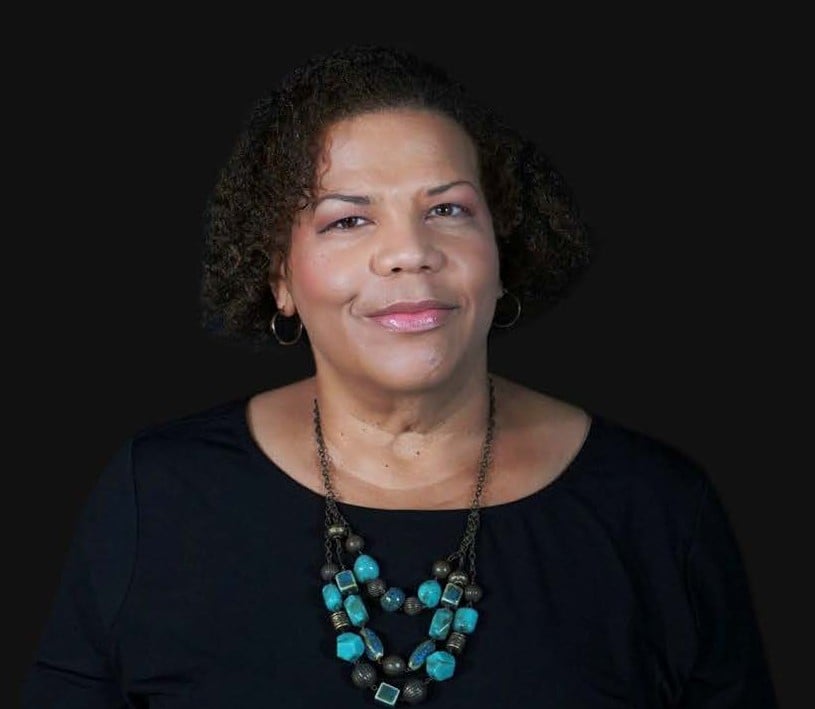
In many communities, residents would have waited to see what showed up. On the Northside, the question of what came next turned into a five-year campaign.
Margaret J. Wright, president of the King-Irving Neighborhood Association and a member of the Near Northside Neighbors leadership team, was not going to let the neighborhood settle for a smaller version of what it already had. She grew up in Minneapolis, in a household she describes in a single line: “We grew up in a family of service.” Her father owned and operated a gas and service station, and in the stories neighbors told after his death, he would fix a tire or hand over gas to anyone who could not make it to payday. Her mother was a nurse, neighborhood leader, and founding member of the Southside Clinic in Minneapolis, a free neighborhood clinic that is still operating 50 years later..Wright accompanied her on church visits, feeding the sick and looking in on shut-ins. Decades later, in an Iowa neighborhood four hours south, Wright continues to operate from that model.
That work led to the April 2026 opening of the roughly $22 million Reichardt Community Recreation Center, home to a running track, a basketball court, a technology innovation lab, a community kitchen, and a pool. The facility would be notable in any American city. That it sits in one of Des Moines’ historically underinvested neighborhoods, and that its final design reflects the priorities residents themselves identified, is Wright’s fingerprint and her legacy.
The path there was not simple. The city committed $12 million to the project, most of it federal pandemic relief money, and the first design concepts presented to residents were drawn to fit inside that figure. Wright and her neighbors did their homework and came back with numbers from cities of comparable size, showing that a center meeting the community’s actual needs would run closer to $20 million. They kept pressing. Private fundraising eventually brought in more than $6 million, carrying the project past $18 million, and rising construction costs did the rest.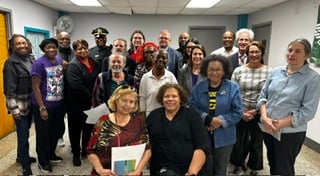
“When the Northside neighborhood needed a new recreation center, Margaret believed that her neighborhood deserved an excellent building with a wide range of options,” said Stephanie Murphy, executive director of Neighborhood Finance Corporation, which nominated Wright for the 2026 Dorothy Richardson Award for Resident Leadership. “She made it her mission to lift community voices and make sure the center would meet everyone’s needs. She’s worked tirelessly for our community, and we’re pleased to see her recognized for the work she does every day.” Founded in 1990, NFC is a nonprofit mortgage lender and chartered member of the NeighborWorks network that finances home purchases and renovations in Des Moines neighborhoods.
The Dorothy Richardson Award, presented annually by NeighborWorks® America, recognizes residents whose leadership has changed and improved the communities they call home. It is named for Dorothy Mae Richardson, who in the 1960s brought together neighbors, bankers, and government officials to reverse disinvestment in her community, seeding the model that grew into NeighborWorks. Wright’s work fits comfortably inside that tradition, and her method for doing it is her own.
Ask her how the coalition around the Reichardt Center held together for five years, and the answer does not include strategy. It comes down to a single word: listening.
She rarely gives her own opinion at community meetings, she explains. She opens with the reason people are there, then makes room for everyone else to talk, including community members who may not always speak eloquently or say quite the right thing. “Try to listen to what their intent is.” The other habit is disarmingly simple: “everything I do is in collaboration with somebody else.” Wright is uneasy being called a leader of the meetings she convenes. She would rather showcase the neighbors around the table.
Mary Chapman, who has known and worked with Wright for more than 30 years, recognizes the pattern. “She’s a very strategic thinker and she always engages other people. She asks the right questions. She’s always the optimist, looking for the good.” And she knows, Chapman said, that “when a community thrives, the whole city benefits.”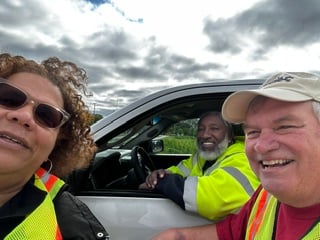
That habit is why, with the Reichardt Center open, Wright isn’t treating the ribbon cutting as a finish line. She has moved on to filling the building with the kind of programming that turns a facility into a neighborhood anchor. Her cooking classes for teenagers meet in the center’s community kitchen. Young people had told her they did not feel seen by adults, so the classes are not only meals, but offer a skill to take home, and a bag of the same groceries so the teenagers can make the meal again for their families. “Just make them feel seen,” she says, “and make them feel a part of the community.”
Her scope reaches well past the rec center. Earlier this year, she sat on the advisory group that saved the Evelyn K. Davis Center for Working Families when the local community college, facing state budget cuts, decided it could no longer host the program. Wright, the funders, and the community mapped a handoff to Lutheran Services of Iowa without losing staff or a grant cycle. She is also in the middle of a fight to keep the Forest Avenue Library, one of the last free indoor spaces the neighborhood’s children can walk to, from being shuttered in the current city budget round. She estimates five or six meetings a week, plus the calls and emails in between.
Debra Carr, who leads a nearby neighborhood association, has watched that range up close. “Margaret has spent decades showing up in neighborhoods, in boardrooms, and in organizations, in spaces where decisions are being made that affect children, families, and communities,” she said. “She brings an extensive experience and wisdom to the table, but she also brings something equally important, and that is a willingness to continue to do the work and ask the tough questions.” There is a common thread throughout her journey, Carr said. “She wants to help create opportunities to strengthen communities and make sure all people have a voice.”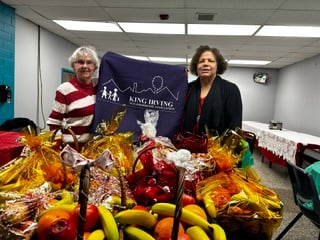
Wright lives in her husband’s childhood home, a small 1900s cottage the two of them rehabbed after moving back from Texas to help care for his mother. Their four sons are grown and scattered across Minnesota, California, and Oregon, along with 10 grandchildren. The neighborhood she is fighting for is the same one where her kids once played T-ball at the community center, one block from her front door.
Ask people on the Northside how the Reichardt Center came to be what it is, and Wright’s name comes up quickly. Ask her about it, and the conversation turns instead to the neighbors who showed up at planning meetings, the older adults who now have somewhere to walk in the winter, and the young people using the innovation lab. Her leadership style borrows heavily from Richardson’s playbook: Convene the right people, hold institutions accountable to the residents they serve, and keep showing up long after the initial fight has been won.
As NeighborWorks marks America250, the bipartisan initiative commemorating the 250th anniversary of the founding of the United States, Wright’s story is one of four celebrated this year. It reflects the work of neighbors on ordinary blocks, insisting that the places they love deserve better, and then doing what it takes to make it so.