


The neighborhood where Chester Dewitt grew up, known as Chad Brown, has a reputation. “There came a time that whenever a violent crime made the news, it was called ‘Chad Brown-related,’” he said.
But when Dewitt was growing up there, every parent knew every child. “We were a community where there was a lot of poverty, where families did not always have enough to eat,” he said. “But we helped one another through the rough patches.”
Today, Dewitt is still helping Chad Brown through rough patches by establishing safe spaces for kids, and forging health and connection through sports leagues, a Bike Distribution and Repair project, and more.
Dewitt’s work led NeighborWorks® America to select him as a recipient of the Dorothy Richardson Award for Resident Leadership. The national award, named for a woman who brought government, public and private groups to the table to save her Pittsburgh neighborhood from disinvestment, will be presented Oct. 31 during the NeighborWorks Community Leadership Institute in Minneapolis.
Chad Brown Day
When Dewitt was growing up in Chad Brown, the mothers in the community developed a barter system. When one mom didn’t have enough to cook, she’d make out a shopping list. “And we'd go to next door and give it to the neighbor’s mom. We’d sit on the floor playing with our friends and the mom would fill out the list.”
Everybody took care of everybody, he said.
Today, the vibe isn’t the same. He knew that when he returned to Providence from the Navy, where he’d served for eight years, including in Afghanistan and during Sept. 11. He could feel the difference, he said. “And that’s something I really wanted to work on fixing.”
He began playing basketball with friends who had also grown up in Chad Brown but moved away. “All of a sudden, the basketball game turned into donating money to our local recreation center and trying to do events for kids – like basketball leagues, softball leagues for the children.” Dewitt, who played football in high school and college and even had a tryout professionally, began coaching football. He continues to do so for whatever age group his son is in -- currently it’s the North End Seahawks, the 14-year-old group. He also coaches his older son, who has autism, in the Special Olympics in softball and the 50-meter dash.
They made their community organization official after a conversation at a friend’s barbershop when Derek “Earl” Hazard suggested they form the Chad Brown Alumni Association.
“A few brothers in my barbershop said, ‘let’s form something positive by doing something in our community to help out,” said Hazard, owner of Inner City Hair Design.
Dewitt became a board member, then was voted in as vice president as well. “We said, ‘Chester, the stuff you do – you’re a liaison to our community. The stuff he was doing rubbed off on all of us. He’s a motivation.”
As an organization, they worked to bring together resources and partnerships, “and do things better in the community. Our mission is to bring community back to the neighborhood. That’s what we had growing up. That’s why we’re so tight until this day.”
They also work to change the narrative. “People don’t always shine the positive light on what we do because of where we come from. We work hard to change that narrative. We’re going in the right direction.”
Along with serving as mentors, the Chad Brown Alumni Association began to host Chad Brown Day, to “celebrate the good things in life,” said Dewitt, who now lives in Smith Hill. The event is held annually. “We try to bring back the community part of it. We started with cookouts and then it started growing, growing and growing. We kept trying to find little things we could do to put that happy vibe back into the community.”
There are also holiday toy drives and turkey drives, and a backpack drive in the summer. Chad Brown Day now includes a bouncy house, music, and awards to people who are doing great things in the community. Dewitt wants people to know that there are good things in the community, even if it’s the negative ones that make the headlines.
“Chester is the type of leader who is constantly implementing projects, and identifying new needs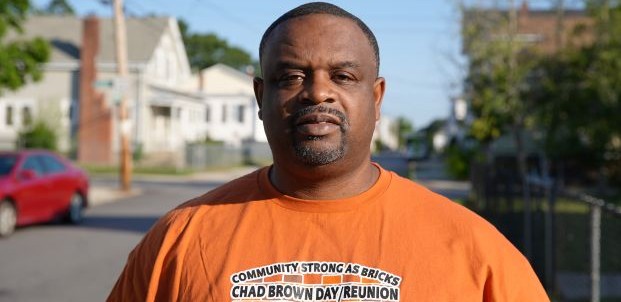 within his community, meaning he doesn’t stop to celebrate his accomplishments,” said Dominique Resendes, associate director of Community Infrastructure for One Neighborhood Builders. She hopes the Dorothy Richardson award will “allow Chester to slow down and see that his accomplishments are recognized and appreciated by the greater community.”
Keeping it growing
Chester got started in community work by watching the mothers in his community. “They took care of all of us. I felt like I wanted to do something like that, too.”
One evening, the city council held a session asking people what they’d do if they had a million dollars. Dewitt, whose football team currently practices on a baseball field, said he’d build a real football field so students had a place to play and work out.
“I guess my voice was loud enough and clear enough that they wanted to keep me around,” he said. Staff at One Neighborhood Builders asked him to serve on a committee, tapping into community needs and wants. “I joined because I was interested in what was going on and the wheels started turning.”
While his football field made it to the list, there were lots of other ways to help the community. As the ONB team honed in on things the community wanted, the bike repair program – and an associated grant – rose to the top. “I'm all on board for that,” Dewitt said.
He took it on, serving kids in nine neighborhoods within two zip codes. He didn’t tell them that they’d be getting their own bikes in the end – just that he was offering a training course. With pizza.
In the end, 75 kids received bikes. “They were so excited,” Dewitt recalled. “We did a bike ride from the recreation center to the major park where we had a community festival.” The event garnered more attention for the community – the good kind.
Growing up, recreation and sports had always helped keep him and other kids out of trouble, Dewitt explained. That’s why he thinks it’s so important now. When he came home from the military and found they had shut down the recreation center, he knew they’d also cut off a resource for safety and wellbeing, a place kids could relax and not look over their shoulders all of the time. “I didn’t like it all. It peeves me a little bit. So that’s why we did these little leagues for the kids. The months they’re there, they’re not getting in trouble and that means an awful lot with me.”
He continues to work with the community in other ways, too. He’s involved in The Handshake Initiative, helping elementary kids start their day. He also hosts a game night every two weeks at middle schools in Providence with students, local law enforcement, fire fighters, city officials and other community leaders.
His Mentorship Through Sports program, which launched this year, will provide a place for kids to connect with mentors and train for softball, football, lacrosse, volleyball, and more. His hope is to also teach kids to swim, he said, and to have a job component.
He also works with seniors in the community, especially those with memory issues. He got his start working through the Alzheimer’s Disease Neuroimaging Initiative, and it made him realize how underserved the senior community truly is. “It’s a blessing to be able to do this because. I started with nothing, just to want to do good in our community, and it's grown into this.”
Recently, he learned that the mayor’s office is going forward with the football field. They’ll be breaking ground this coming spring.
What advice does Dewitt have for someone else who wants to start helping their local community?
To start, he suggests getting in touch with your city council. “They know what's going on in the community. And then start networking. The guys in charge of the recreation centers, they’re at the city council meetings. Small businesses that are willing to give money to the community are there. And if there’s something you want to do, be vocal about it. Don't hesitate. Don't be nervous. Don't doubt yourself. Try. The worst they could do is say no.”
Working for his community is something he’ll continue to do. Learning he had been selected for the Dorothy Richardson award gave him a surge of excitement. “I don't know what it going to bring me, but hopefully more good things for our community.”
Premio Dorothy Richardson: Chester Dewitt repara bicicletas y ayuda a la comunidad
Chad Brown, el vecindario donde creció Chester Dewitt, tiene su fama. “Llegó un momento en que, cada vez que un delito violento aparecía en las noticias, se decía que estaba ‘relacionado con Chad Brown’”, comentó.
Sin embargo, cuando Dewitt creció allí, todos los padres conocían a todos los niños. “Éramos una comunidad con mucha pobreza, donde las familias no siempre tenían suficiente para comer”, dijo. “Pero nos ayudábamos mutuamente en los momentos difíciles”.
Hoy, Dewitt sigue apoyando a Chad Brown en los momentos difíciles: crea espacios seguros para los niños y fomenta la salud y la unión mediante ligas deportivas, un proyecto de distribución y reparación de bicicletas, entre otras iniciativas.
El trabajo de Dewitt hizo que NeighborWorks® America lo eligiera como ganador del Premio Dorothy Richardson por Liderazgo de Residentes. Este premio nacional, que lleva el nombre de una mujer que logró reunir a organismos gubernamentales, entidades públicas y privadas para salvar su vecindario en Pittsburgh de la desinversión, se entregará el 31 de octubre en el marco del NeighborWorks Community Leadership Institute en Mineápolis.
Día de Chad Brown
Durante la infancia de Dewitt en Chad Brown, las madres del vecindario organizaron un sistema de trueque. Cuando una madre no tenía suficiente para cocinar, hacía una lista de compras. “Y nosotros íbamos a la casa de al lado y se la dábamos a la madre vecina. Nos sentábamos en el suelo a jugar con nuestros amigos mientras la madre completaba la lista”.
Todos cuidaban de todos, dijo
Hoy en día, el ambiente no es igual. Dewitt se dio cuenta de esto cuando regresó a Providence tras su paso por la Marina, donde sirvió durante ocho años, incluidos Afganistán y los hechos del 11 de septiembre. Podía sentir la diferencia, dijo. “Y eso era algo que realmente quería ayudar a solucionar”.
Empezó a jugar al baloncesto con amigos que también habían crecido en Chad Brown, pero se habían mudado. “De repente, el baloncesto se transformó en donar dinero a nuestro centro recreativo local y en organizar actividades para los niños, como ligas de baloncesto y softbol”. Dewitt, que jugó al fútbol americano en la secundaria y la universidad e incluso tuvo una prueba a nivel profesional, comenzó a entrenar fútbol americano. Sigue haciéndolo con el grupo correspondiente a la edad de su hijo; actualmente se trata de los North End Seahawks, el grupo de 14 años. También entrena a su hijo mayor, que tiene autismo, en los Special Olympics en softbol y en los 50 metros planos.
Hicieron oficial su organización comunitaria después de una conversación en la barbería de un amigo, cuando Derek “Earl” Hazard (el barbero) les sugirió crear la Chad Brown Alumni Association.
“Algunos hermanos en mi barbería dijeron: ‘hagamos algo positivo para nuestra comunidad y ayudar a los demás’”, relató Hazard, propietario de Inner City Hair Design.
Dewitt se convirtió en miembro de la junta y, luego, lo eligieron como vicepresidente. “Decíamos: ‘Chester, lo que haces… eres un representante de nuestra comunidad. Lo que él hacía nos influenciaba a todos. Él es una motivación’”.
Como organización, trabajaban para reunir recursos y establecer alianzas, “y mejorar las cosas en la comunidad. Nuestra misión es devolver la vida comunitaria al vecindario. Eso es lo que teníamos cuando crecimos aquí. Por eso seguimos tan unidos hasta hoy”.
Además, se esfuerzan por cambiar la narrativa. “Las personas no siempre ponen en valor lo positivo de lo que hacemos por el lugar de donde venimos. Trabajamos mucho para cambiar esa narrativa. Vamos por buen camino”.
Además de desempeñarse como mentores, la Chad Brown Alumni Association empezó a organizar el Día de Chad Brown para “celebrar las cosas buenas de la vida”, dijo Dewitt, que ahora vive en Smith Hill. El evento se realiza anualmente. “Tratamos de recuperar la parte comunitaria. Empezamos con parrilladas y luego fue creciendo cada vez más. Seguíamos buscando pequeñas cosas que pudiéramos hacer para devolver ese ambiente positivo a la comunidad”.
También hay campañas de recolección de juguetes y pavos durante las fiestas, y una colecta de mochilas en verano. El Día de Chad Brown ahora incluye un castillo inflable, música y premios para quienes realizan grandes aportes en la comunidad. Dewitt quiere que las personas sepan que en la comunidad también hay cosas buenas, aunque sean las negativas las que ocupen los titulares.
“Chester es el tipo de líder que siempre está implementando proyectos e identificando nuevas necesidades en su comunidad, lo que significa que no se detiene a celebrar sus logros”, dijo Dominique Resendes, directora asociada de infraestructura comunitaria de One Neighborhood Builders. Ella espera que el Premio Dorothy Richardson “le permita a Chester tomarse un respiro y darse cuenta de que toda la comunidad reconoce y valora sus logros”.
Crecimiento continuo
Chester empezó su trabajo en la comunidad mediante la observación de las madres de su vecindario. “Ellas cuidaban de todos nosotros. Sentí que yo también quería hacer algo así”.
Una noche, el concejo municipal organizó una sesión para preguntar a las personas qué harían si tuvieran un millón de dólares. Dewitt, cuyo equipo de fútbol americano actualmente entrena en un campo de béisbol, dijo que construiría un verdadero campo de fútbol para que los estudiantes tuvieran un lugar donde jugar y entrenar.
“Supongo que mi opinión era lo suficientemente sólida y clara como para que quisieran que siguiera participando”, dijo. El personal de One Neighborhood Builders le pidió que formara parte de un comité para atender las necesidades y deseos de la comunidad. “Me uní porque me interesaba lo que estaba pasando y las ideas empezaron a fluir”.
Aunque su campo de fútbol llegó a la lista, había muchas otras formas de ayudar a la comunidad. A medida que el equipo de ONB se centraba en lo que la comunidad quería, el programa de reparación de bicicletas (junto con la subvención asociada) se convirtió en la principal prioridad. “Estoy totalmente de acuerdo con eso”, dijo Dewitt.
Se hizo cargo del proyecto y se ocupó de los niños de nueve vecindarios en dos códigos postales. No les dijo que al final recibirían sus propias bicicletas; solo que estaba ofreciendo un curso de capacitación. Con pizza incluida.
Al final, 75 niños recibieron bicicletas. “Estaban tan emocionados”, recordó Dewitt. “Hicimos un paseo en bicicleta desde el centro recreativo hasta el parque principal, donde organizamos un festival comunitario”. El evento llamó más la atención sobre la comunidad, y de manera positiva.
A medida que crecía, la recreación y los deportes siempre lo habían ayudado a él y a otros niños a mantenerse alejados de problemas, explicó Dewitt. Por eso considera que es tan importante ahora. Cuando regresó del ejército y descubrió que habían cerrado el centro recreativo, supo que también habían eliminado un recurso clave para la seguridad y el bienestar: un lugar donde los niños pudieran relajarse sin tener que mirar por encima del hombro todo el tiempo. “No me gustó para nada. Me molestó un poco. Por eso organizamos estas pequeñas ligas para los niños. Durante los meses que están allí, no se meten en problemas, y eso significa muchísimo para mí”.
También sigue trabajando con la comunidad de otras maneras. Participa en The Handshake Initiative, donde ayuda a que los niños que asisten a la escuela primaria empiecen bien su día. Además, organiza una noche de juegos cada dos semanas en las escuelas intermedias de Providence con estudiantes, la policía local, bomberos, autoridades de la ciudad y otros líderes comunitarios.
Su programa Mentorship Through Sports, que se lanzó este año, ofrecerá un espacio para que los niños se conecten con mentores y reciban entrenamiento en softbol, fútbol americano, lacrosse, voleibol, entre otros. También espera enseñarles a nadar, dijo, y que el programa incluya un componente laboral.
Además, trabaja con adultos mayores de la comunidad, en especial con aquellos que tienen problemas de memoria. Empezó su labor a través de la Alzheimer’s Disease Neuroimaging Initiative y eso le hizo darse cuenta de lo desatendida que está realmente la comunidad de personas mayores. “Es una bendición poder hacer esto. Empecé sin nada, solo con ganas de hacer el bien en nuestra comunidad, y eso ha crecido hasta convertirse en esto”.
Recientemente se enteró de que la oficina del alcalde seguirá adelante con el proyecto del campo de fútbol. La construcción empezará esta primavera.
¿Qué consejo tiene Dewitt para una persona que quiera empezar a ayudar a su comunidad local?
En principio, sugiere ponerse en contacto con el concejo municipal. “Ellos saben lo que sucede en la comunidad. Luego, empieza a hacer contactos. Los responsables de los centros recreativos asisten a las reuniones del concejo municipal. Los pequeños negocios dispuestos a apoyar a la comunidad también están presentes. Y si hay algo que quieras hacer, dilo. No dudes. No estés nervioso. No te cuestiones. Inténtalo. Lo peor que podrían hacer es decir que no”.
Trabajar por su comunidad es algo que seguirá haciendo. Cuando se enteró de que lo habían elegido para el Premio Dorothy Richardson, sintió una gran emoción. “No sé qué me traerá, pero espero que más cosas buenas para nuestra comunidad”.