

The NeighborWorks Mission in Action
Midwest Region: Building Coalitions to Bolster Homeownership
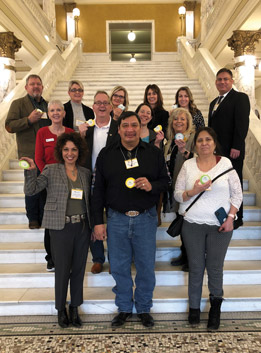
Traditions are passed down, generation to generation. NeighborWorks America's traditions include building alliances and providing education for future homeowners. Those traditions are making a difference in South Dakota, where network organizations are working in collaboration with tribal leadership and Native-led organizations to increase Native American homeownership.
GROW South Dakota has provided NeighborWorks financial capability training to Native American housing practitioners, who in turn are educating future homebuyers in their communities, said Lori Moen, chief operating officer for the organization.
And since the South Dakota Native Home Ownership Coalition formed in 2013 with a mission to increase Native homeownership and remove obstacles, GROW SD has been an active member. NeighborWorks supported the coalition last year as it has for the last several through network members GROW SD and NeighborWorks Dakota Home Resources and with local partner Lakota Funds, the group's fiscal sponsor.
In South Dakota, the Native homeownership rate is 37.7 percent, Moen said, about half the rate for whites. The coalition is creating opportunities to change that.
It can take up to eight hours to drive across South Dakota, said Seven Sisters Community Development Group's Leslie Newman, who helps facilitate the coalition. Funding from NeighborWorks helps participants travel to coalition events in tribal communities and to annual planning sessions.
From those meetings, an internship program was created to train workers to assist with rural home building and repairs, and a pilot program was developed for Native Community Development Financial Institutions to lend $2 million in Rural Development 502 funds to Native homebuyers. There has been peer learning and a better understanding of homebuying on tribal land, according to Newman. And they've been able to access funding through existing programs, now that they better understand them. "I know we've made a difference."
Moen agrees. "By collaborating efforts and creating an environment of trust, we have been successful in creating opportunities for Native families in South Dakota to obtain their dream of homeownership," she said. The coalition has brought GROW SD and Dakota Home Resources partnerships they wouldn't have made otherwise — partnerships they rely on to navigate challenges. The coalition, now working toward nonprofit status, relies on them as well.
Juel Burnette, branch manager of 1st Tribal Lending, one of few lending institutions taking on the challenge of lending in Native communities, said the coalition has been a great connector. "Without those community contacts, our Native American families do not have a trusted face to help guide them through the hurdles in the homebuying process," he said.
Northeast Region: Better Together: Strategic Network Mergers Expand Services and Reach
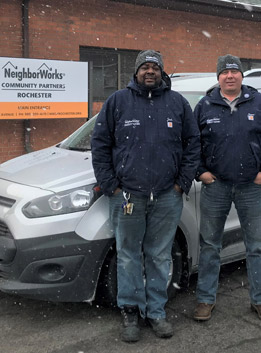
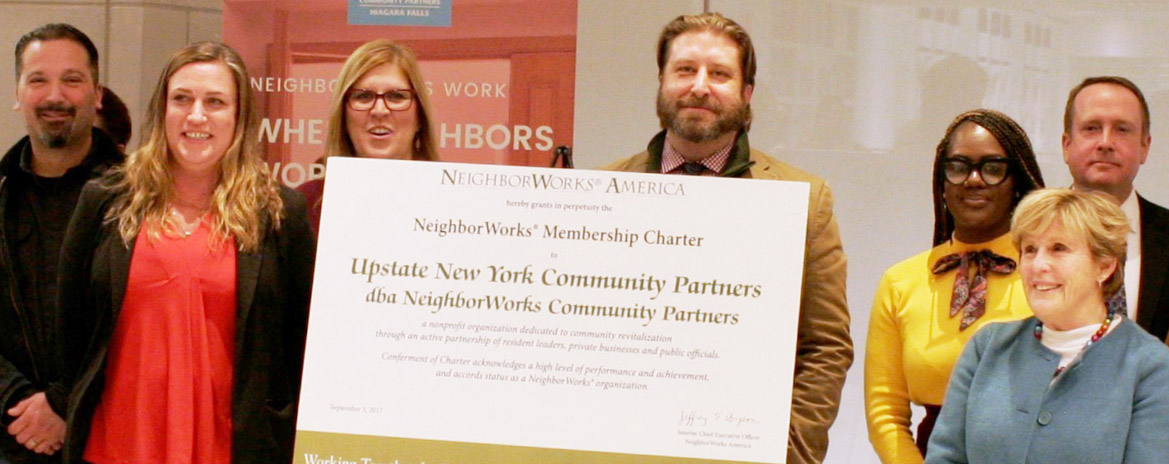
NeighborWorks America has a commitment to build and strengthen communities. So do our network organizations. When three of them and one group outside the network in western New York started talking about how they could work together to better serve their communities, they decided to really work together. They merged to form a new parent organization known as NeighborWorks Community Partners.
"The four organizations were all strong in their own suit," said Jerome Nagy, CEO of NeighborWorks Community Partners. "They had strong financials. But if they didn't come together, it would have been almost impossible to scale up. They decided there was power in numbers."
The merger took place in 2015 and there were a few growing pains, according to Nagy. But during 2019, they worked on plans for programs they could expand, particularly the energy services division, with help from a grant from NeighborWorks America. NeighborWorks also helped with branding the new organization.
"We're scaling up now," Nagy said. The energy services program, which had been strong in Rochester, has expanded into Erie County and Niagara County. The goal is to offer energy audits and loans to help homeowners make their homes more efficient. "You can see the results almost right away," Nagy said.
On the lending side, NeighborWorks Community Partners spent much of 2019 streamlining their programs and creating additional lending services. In the last quarter of 2019, the organization began discussing how to leverage their dollars — because they found that the combined group was in a much better position to do that. Homeownership programs have also been streamlined, allowing the organization's financial counselors to move among the different offices in an eight-county area.
"We can keep customers moving toward homeownership in a way that we haven't in the past," Nagy said. "The strength in numbers is starting to deliver. When we look at the impact we could have with grant money and lending capital and services — I don't think any of us could offer these services individually. It's a testament to all who have worked to get us here."
But, according to Nagy, the community members are the real winners. They can take advantage of more resources and a higher level of services.
Southern Region: Support in the Volunteer State
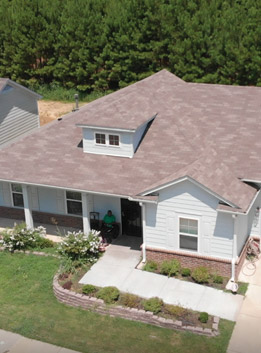
Robertine Payne spent two years living in a nursing home in Memphis, Tennessee. She had to be in bed by a certain time every evening, with the lights out. She couldn't hang decorations on the walls. It didn't feel like home.
But she spent last year in a one-story, four-bedroom house built by United Housing Inc. as part of a pilot program initiated by NeighborWorks Alliance of Tennessee and TennCare. The goal of the supportive housing program is to bring people who are living in institutions — but capable of functioning in a community — back into the community. With a caregiver to help Payne and her housemates navigate, she has more independence than she's had in recent memory. "I have my freedom," she said. She goes shopping when she wants and has more time for fellowship and activities.
Last year was the first year that the pilot homes, built in a variety of communities in Tennessee, were all filled with residents. That's housing for 20 people. But it's 20 people whose lives have been changed.
Starting a project like this is expensive, said Jackie Mayo, CEO of HomeSource east tennessee. The homes must accommodate wheelchair-bound patients and meet other accessibility standards. But once the program gets going, there's a cost savings for individuals and the state — $33,000 per house per year, according to Amy Schaftein, CEO of United Housing.
For the pilot program, regions experimented with different home styles to evaluate what worked best: three- or four-bedroom homes in some communities, microhomes in more expensive Nashville.
Residents are charged 30 percent of their income and share utility costs. They mention being closer to family and being able to sleep and eat when they want as benefits of the new living situation.
"It seems to be working so far," Mayo said. "It is a great opportunity to help people."
The Tennessee alliance was created with the help of NeighborWorks America, which has experience in forming such alliances. When the alliance, which includes Affordable Housing Resources Inc., Chattanooga Neighborhood Enterprise and Eastern Eight CDC, partnered with TennCare, Tennessee's Medicaid program, "we were able to move forward as a cohesive, collaborative group to do something very impactful," Mayo said. "I don't think that would have happened without NeighborWorks giving us the wings to fly."
The state still has to decide how to follow up, housing officials said. But the residents who are part of the pilot program? They're home.
Western Region: A New Home in Alaska
 Paul Widener is a single father with three kids. A truck driver in Alaska, he makes enough to pay his bills on time — but not enough to cover the down payment and closing costs for a house.
Megan Kittelman had been working two jobs to save enough for a down payment on a home in Fairbanks. But in April of 2019, she had to undergo surgery that her insurance didn't fully cover. "I ended up having to spend all of my house savings for surgery," she said. "I was left thinking I would never be able to purchase a house."
The NeighborhoodLIFT program, a collaboration between NeighborWorks America and Wells Fargo, came through for both of them. The program launched in Alaska last year with $3.3 million, providing down payment assistance and
homeowner education. Alaska is the largest state in the union. NeighborWorks Alaska (NWAK) Homeownership Center has its office in Anchorage. Another NeighborWorks organization, Fairbanks Neighborhood Housing Services Inc. (NHS), has its office in Fairbanks. With the help of NeighborWorks America's LIFT team — and technology — the network organizations were able to streamline the approval process to help homeowners across the state, even in communities that could only be reached by plane.
"It's important to meet Alaskans where they are," said Barbara Worley, director of lending for NeighborWorks Alaska. The LIFT funds were spoken for within about three weeks, she said. "It was an unprecedented, overwhelming response." Nadine Winters, executive director of NHS, said some of those approved for the $10,000 down payment assistance grants ($12,500 for veterans, military, teachers and first responders) broke down in tears.
"Due to our combined efforts, we were able to assist nearly 300 Alaskans into homeownership in a very short period of time," said Jim Nordlund, executive director for NWAK. "The demand is still strong, and we'd be happy to do it again."
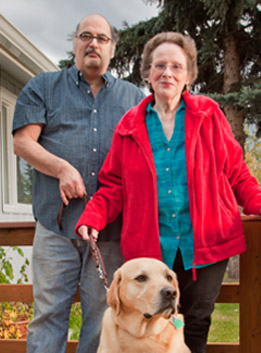
NeighborWorks supported Alaska with disaster assistance, too, after a 7.1 magnitude earthquake hit the state. Danny and Karen Maldonado (pictured left), who bought their home with help from NWAK, needed help again when the earthquake damaged a waterline beneath their home. Water damaged the foundation. It caused their driveway to heave, making an uneven path for Danny, who is blind. It also caused mold issues.
Enter NeighborWorks America, which helped NeighborWorks Alaska provide the couple with a $20,000 loan at 1 percent interest — and a safe place to live.