

Creating Strategic Community Impact with Better Data
NeighborWorks America seeks to build our network organizations' capacity to create meaningful community impact that addresses deep-rooted issues and challenges. One of the ways this is accomplished is through the development of comprehensive programs that intersect strategy and community engagement. The outcomes help to create awareness and forge partnerships that ultimately lead to revitalized communities and help spur economic growth. Approaches to this work incorporate strategies to engage residents, build community, create awareness, forge partnerships, revitalize neighborhoods, promote economic growth and elevate marginalized voices.
Part of this ongoing work means constantly adapting and evolving approaches to create processes that accelerate change. A recent pilot program launched by NeighborWorks America in 2019, called a Strategy and Impact Demonstration, brought together 20 network organizations with NeighborWorks staff, experts and coaches. The goal of the pilot was to help find new ways to measure impact, track outcomes and plan for new strategic initiatives. Organizations were coached around how to combine secondary or supplemental data with their Community Impact Measurement (CIM) data to get a clearer picture of their work. CIM is a long-term effort to work with network organizations to measure change over time in order to better document the impact of their work on key dimensions of comprehensive community development and revitalization.
Many groups produced important and relevant data, but not all of them were equipped to dive deeper and see what it means for their strategic direction within the context of their community development efforts. There was a clear need to use supplemental, secondary data in order to tell a better story. Examples of secondary data sources include Multiple Listing Service (MLS), assessors' offices, or local health-related statistics and the census.
The Strategy and Impact Demonstration group gathered for an intensive training in Cleveland, Ohio, where they worked with NeighborWorks staff and experts to analyze their current comprehensive community development goals, plans, strategies and collected data. They worked with coaches to identify secondary data sources that would be helpful and exchanged ideas and best practices with their peers in the program.
The meeting in Cleveland provided the participating organizations with unique opportunities for collaborating and learning. Teams were able to dig into their data together, break down silos, and start to rethink and reimagine their goals. That was certainly the case for Saint Joseph's Carpenter Society (SJCS), a NeighborWorks network organization that serves the city of Camden, New Jersey.
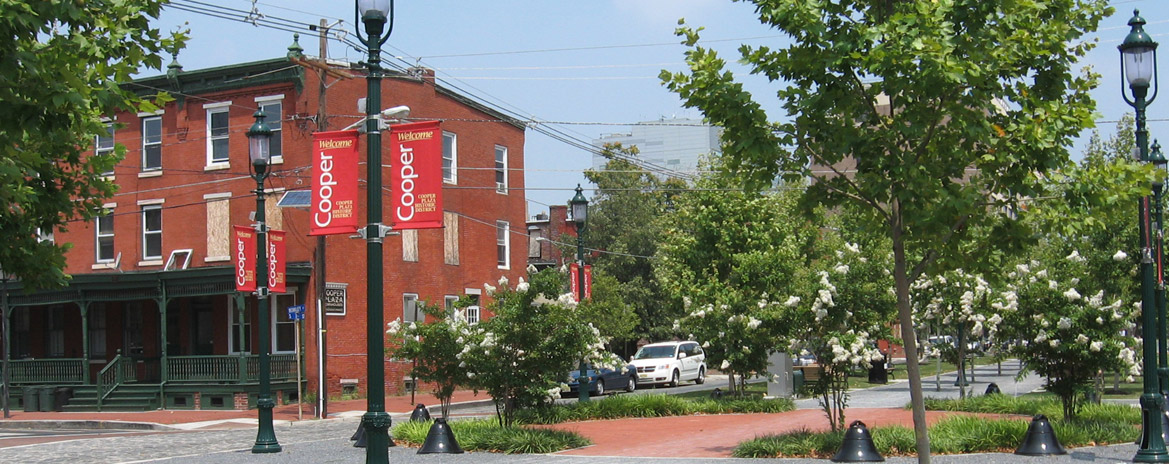
For the pilot program, SJCS focused on its work in the Cooper Plaza area, where the organization has partnered with Cooper Hospital since 2007, to improve real estate market conditions. In this neighborhood, SJCS has rehabbed and sold 54 homes and made 33 repairs and 107 façade improvements.
SJCS analysis included various CIM surveys and supplementary data from the census and American Community Survey, as well as citywide MLS data for the past decade.
According to the team at SJCS, they learned the real estate market is "healthy and competitive with few vacant properties and a healthy homeownership rate" and that residents felt the image of the neighborhood is "positive." The SJCS team also could see from the data that there was a need for more opportunities for residents to connect and get involved in community activities.
"We could look at areas where people feel most engaged versus least engaged, versus their tenure in the neighborhood," said Enrique Rivera, SJCS project manager. "Those things opened up various new strategies for us and made us think more creatively about what we're going to do." To address the concerns of community engagement, SJCS created new opportunities for residents to meet each other and get involved in civic life.
SJCS Executive Director Pilar Hogan Closkey praised the pilot program for providing access to effective tools, high-quality coaching and a network of peers. SJCS' work through the program also has helped the organization to more effectively communicate its goals, outcomes and values.
"It gave us better talking points," said Closkey, who recently spoke with the local mayor about their new data insights. "I think the data that we had before was good, but it wasn't mayor-ready. [This is] not only really interesting data that backs up what we've been doing for so many years, but it actually is pleasing to look at and gets across the points that we need to make."